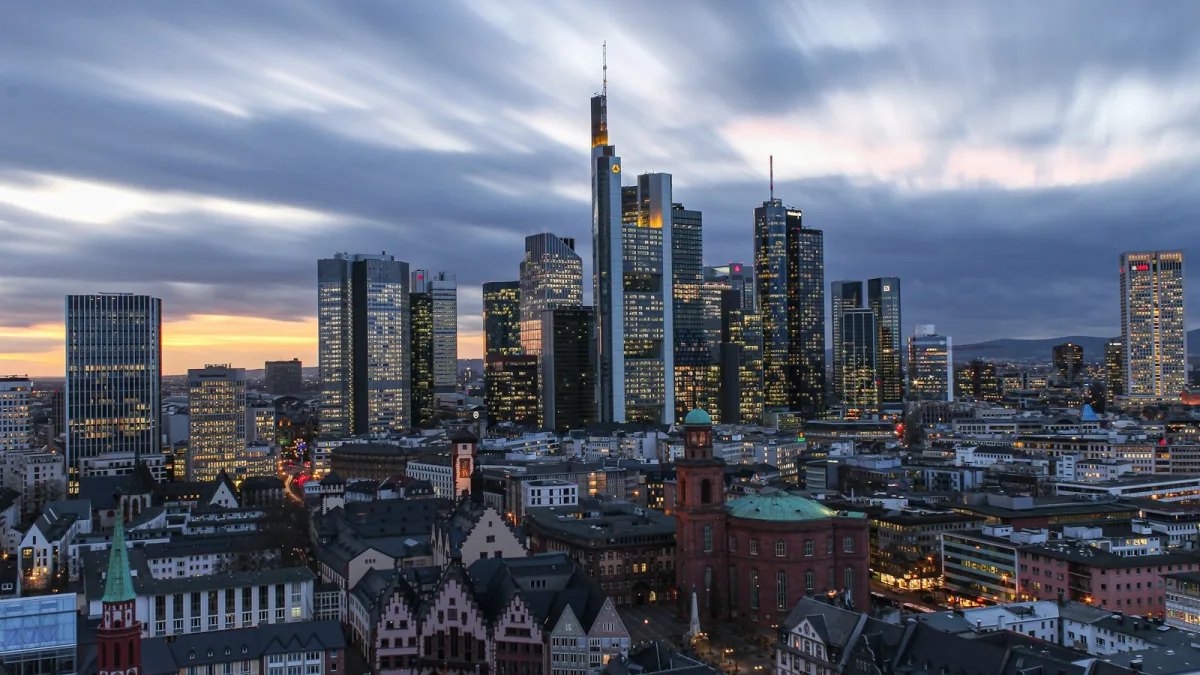
Frankfurt gets written off as a city of glass towers and bankers, Germany's answer to a financial district with nothing around it. Spend a week there and that reputation falls apart. It's small, walkable and surprisingly green, it has the most international population of any German city, and it packs the country's best air and rail connections into a place you can cross in twenty minutes. The skyline is real, but so are the cider taverns, the river parks and the museum embankment behind it.
For a professional, the draw is money and connectivity. This is where the highest-paying finance, banking and consulting jobs in Germany are, the European Central Bank and most major banks sit here, and the airport puts the rest of the world a direct flight away. The trade-offs are a competitive housing market and a city that works hard and can feel buttoned-up next to Berlin.
This guide is about Frankfurt the city, its districts, the housing search, what you'll earn and spend. For the Germany-wide machinery, the visa, the salaries by field, the tax, we've written those separately and linked them where they matter.
Key Facts at a Glance
| Detail | Info |
|---|---|
| Population | ~770,000 in the city, part of the much larger Rhein-Main region |
| Vibe | International, corporate, compact, efficient, "Mainhattan" |
| Main industries | Banking and finance, FinTech, consulting, data and tech, logistics |
| Main work visa | EU Blue Card, fast-track to permanent residency |
| Blue Card PR timeline | As little as 21 months with B1 German |
| Job-seeker route | Opportunity Card (Chancenkarte), needs about €1,091/month in proven funds |
| Transport pass | Deutschlandticket, €63/month, valid nationwide |
| The hard part | Housing. Tight market, strict landlord paperwork |
| Best for | Finance, FinTech, consulting and data professionals |
Why Frankfurt, and Why Not
Frankfurt is the financial capital of continental Europe, and that shapes the whole job market. The European Central Bank, the Bundesbank, Deutsche Bank and most international banks are based here, so if your field is banking, risk, compliance or finance more broadly, this is where your career and your salary scale fastest in Germany. The "Big Four" and the major consulting firms run their largest German operations from Frankfurt too. Less obviously, it's a serious tech and data hub: DE-CIX, the world's largest internet exchange point by traffic, is here, and the region is thick with data centres, which pulls in cloud and data specialists.
The other quiet advantage is connectivity and internationality. Frankfurt Airport is one of the busiest in the world, the central station is a major European rail hub, and the city has the highest share of international residents in Germany, with the schools, services and social scene to match. It's compact enough to walk or cycle, and the Taunus hills and the countryside are close.
The downsides: housing is competitive and expensive for its size, and the city can feel more corporate and less freewheeling than Berlin. English goes a long way in finance and tech, but daily life and admin still want German, so our tips for learning German are worth a head start. For how Frankfurt sits against the other big German cities, our best German cities guide compares them directly.
The Districts: Where to Actually Live
- Westend: prestigious, quiet and leafy, with grand old buildings and a walk-to-work location by the financial district. Priced accordingly.
- Sachsenhausen: south of the river, known for its traditional Apfelwein (cider) taverns alongside trendy cafes, and popular with young professionals.
- Nordend and Bornheim: the social heart of the city, full of families, markets and a relaxed, community feel.
- Bockenheim: the university quarter, younger and more affordable, well connected to the centre.
- The Speckgürtel (Bad Homburg, Königstein, Kronberg): commuter towns in the Taunus with more space, nature and international schools, popular with families.
As everywhere, central and prestigious means expensive. The trade is minutes-to-work against euros-per-month.
The Housing Reality
Securing a flat is the hardest part of a Frankfurt move. Demand is high, especially for central locations, and landlords expect a complete application, so preparation beats speed.
A few things to expect:
- Cold rent versus warm rent. The advertised "cold" rent (Kaltmiete) is the base cost. The "warm" rent (Warmmiete) adds heating, water and building costs, and that is what you actually pay each month.
- The document pile. Landlords want recent payslips, proof of income, and a SCHUFA credit report you won't have on arrival. Bank statements can stand in at first, and a letter confirming no rent debts from a previous landlord helps.
- Register fast. You must register your address (Anmeldung) at the Bürgeramt once you have a signed lease. That registration unlocks your bank account and tax ID, so arrange the appointment early.
- Start with a landing pad. A furnished, temporary flat for your first two or three months lets you do long-term viewings in person, which is the norm in Germany.
The mechanics are the same across the country, and our guide to renting in Germany covers contracts, deposits and the SCHUFA in detail.
Getting In: Visa Routes
Frankfurt uses Germany's national routes, and two matter most.
The EU Blue Card is the main route for qualified professionals. Frankfurt's finance and tech salaries clear the threshold comfortably, and the Blue Card comes with a fast track to permanent residency, in as little as 21 months with B1 German. Our EU Blue Card guide covers the 2026 thresholds, the timeline and the family rules.
If you don't yet have a job offer, the Opportunity Card (Chancenkarte) lets eligible non-EU professionals come to Germany for up to a year to find work, provided you can show about €1,091 a month in funds. Our Opportunity Card guide explains the points system.
What You'll Earn and Spend
Frankfurt pays the best finance and banking salaries in Germany, and tech and consulting pay strongly too. For what specific fields earn, our Germany salary guide breaks it down by industry.
On the spending side, Frankfurt is an expensive city for its size, with rent again doing most of the work. Everyday costs are broadly in line with the rest of western Germany, and our cost of living in Germany guide has the monthly breakdowns. Worth internalising early: German health insurance is mandatory and charged as a percentage of your salary, deducted from payroll, not as a flat premium.
Getting Around
You will not need a car in Frankfurt. The RMV network of U-Bahn, S-Bahn, trams and buses is dense and reliable, the Deutschlandticket covers it all for €63 a month nationwide, and the compact city centre is easy to walk or cycle. The real standout is onward travel: Frankfurt Airport is one of the world's best-connected hubs, and the central station puts most of Germany and much of Europe within an easy train ride, which is a genuine quality-of-life perk if you like to travel.
The Catch
Frankfurt gives you the highest finance salaries in Germany, the most international city in the country, and unbeatable connections, and asks you to accept a tight housing market and a more corporate rhythm than Berlin. The apartment hunt is the part that tests people, so start it before you arrive. The German directness and the protected work-life balance apply here as everywhere; our guide to German work culture covers the day-to-day.
For how it compares with the other big German options, Berlin is cheaper and more creative, Munich pays similarly and costs more, and Hamburg offers high salaries with a lower cost base.
Frequently Asked Questions
Is Frankfurt a good place for expats to live? Yes, especially for finance, consulting and tech professionals. It has Germany's best-paying finance jobs, the most international population in the country, excellent transport and a compact, green city that is easy to settle into. The main trade-offs are a competitive housing market and a more corporate feel than Berlin.
How much do you need to earn for an EU Blue Card in Frankfurt? Frankfurt uses Germany's national EU Blue Card thresholds, covered in full in our EU Blue Card guide for 2026. Given the city's finance and tech salaries, clearing the threshold is rarely the obstacle, and the Blue Card opens a path to permanent residency in as little as 21 months with B1 German.
Is Frankfurt only good for finance jobs? No. Finance and banking dominate, but Frankfurt is also a major tech and data hub, home to DE-CIX, the world's largest internet exchange, and a cluster of data centres. Consulting, logistics and aviation are strong too, thanks to the airport.
Do I need to speak German to live in Frankfurt? You can work in English in finance, consulting and tech, and the city is used to international arrivals. Daily life and official admin still lean on German, so learning it helps for the long term more than for your first months.
Is Frankfurt expensive to live in? It is one of Germany's pricier cities, mostly because of rent. Salaries are high enough to balance that for most professionals, and everyday costs outside housing are similar to the rest of western Germany.
Do I need a car in Frankfurt? No. The RMV public transport network is excellent, the Deutschlandticket covers it for €63 a month nationwide, and the city is compact and bikeable. The airport and central station make car-free travel across Europe easy.
Frankfurt is the straightforward choice for a finance or tech professional who wants the best salary in Germany and the best connections in Europe, as long as the housing search doesn't put you off. Come with an in-demand skill and start that search early, and it delivers a high standard of living in a genuinely international city.
If you're still deciding which European city fits, our guide to the top European cities for expats compares the main options side by side.
Official sources:
- Make it in Germany, EU Blue Card 2026 thresholds and the route to permanent residency
- Make it in Germany, Opportunity Card (Chancenkarte) requirements
- frankfurt.de, the official City of Frankfurt portal
- Deutschlandticket, Frankfurt transport operator RMV on the nationwide ticket