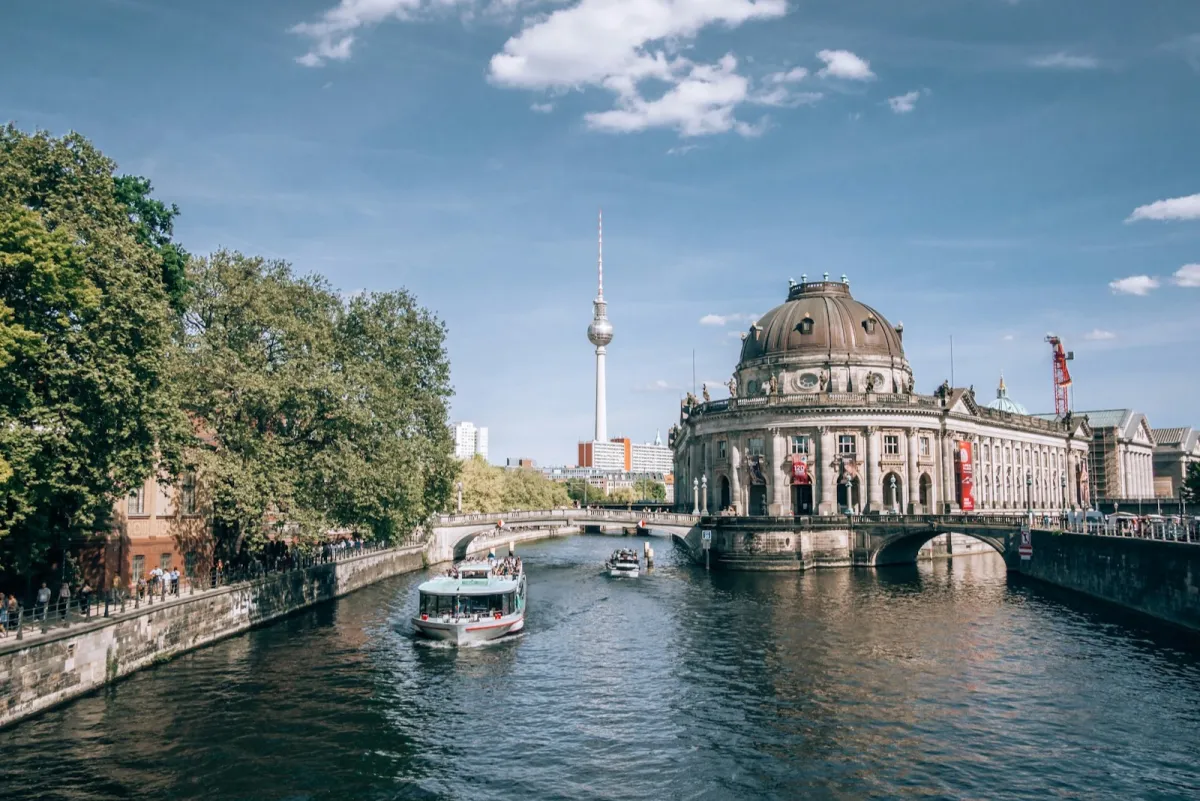
Berlin is the German city Americans have usually heard of, and the one that's least like the rest of Germany. It's cheaper than Munich, weirder than Frankfurt, more international than anywhere else in the country, and you can genuinely build a life here in English while you learn German.
It also has the hardest apartment market in Germany, a bureaucracy that will test your patience before you've unpacked, and salaries that run below Munich and Frankfurt. None of that is a reason not to come. It's a reason to come with your eyes open.
This is a guide to Berlin the city, the districts, the housing reality, and the registration you can't skip. For the Germany-wide machinery, the visa, the salaries, the tax, we've written those up separately and linked them where they matter.
Key Facts at a Glance
| Detail | Info |
|---|---|
| Population | ~3.9 million, Germany's largest city |
| Vibe | Startups, creative industries, international, informal |
| Language | German officially, but English works in much of daily and professional life |
| Main work visa | EU Blue Card, fast-track to permanent residency |
| Transport pass | Deutschlandticket, €63/month, valid nationwide |
| Single ticket | €4.00 (Berlin AB zone) |
| The hard part | Finding an apartment |
| The step you can't skip | Anmeldung, your address registration |
| Best for | Tech, startups, creatives, anyone wanting an international city on a budget |
Why Berlin, and Why Not
Berlin's pull is real and specific. It's Germany's startup capital, with a tech and creative economy that runs in English far more than Munich or Frankfurt do. It's cheaper than any other major German city of its size. And it's genuinely diverse and informal in a way that makes it easy to arrive not speaking the language and not feel like an outsider on day one.
The trade-offs are just as specific. Salaries are lower than in the southern and western business hubs, so a Munich offer will usually pay more than a Berlin one for the same role. The housing market is the worst in the country, which we'll get to. And Berlin's public administration is famously overloaded, so the paperwork that starts your life here takes longer than it should.
If your priority is maximum salary, Munich or Frankfurt likely beat Berlin. If it's an international, creative, English-friendly city where your money stretches further, Berlin is hard to beat. Our guide to the best German cities sets Berlin against the alternatives in detail.
The Districts: Where to Actually Live
Berliners talk about their Kiez, the few blocks around home that function like a village. The city is a collection of these, and which one you pick shapes your daily life more than the city as a whole does.
- Mitte: the centre, most central and most expensive, business and government, less residential character.
- Prenzlauer Berg: leafy, gentrified, popular with families and anyone who wants calm and cafes over nightlife.
- Kreuzberg: the classic Berlin cliche in the best sense, multicultural, political, dense with bars and food, still lively if no longer cheap.
- Neukölln: younger, rougher at the edges, the city's creative churn, where a lot of new arrivals land.
- Friedrichshain: nightlife and a young crowd, close to a lot of tech offices.
- Charlottenburg: west Berlin, older money, grander streets, quieter and more traditional.
There's no wrong choice, only a choice about what you want your ten-minute radius to feel like. Rents rise as you move toward the centre and toward the more gentrified east.
The Housing Reality
This is the part to take seriously. Berlin has too many people chasing too few apartments, and it shows up as viewings with dozens of applicants, landlords asking for a stack of documents, and long searches even for people with good jobs.
A few things that catch Americans off guard:
- Kalt versus Warm rent. Advertised "cold" rent excludes heating and utilities. The "warm" rent is what you actually pay, and it's meaningfully higher.
- The SCHUFA. Landlords want a SCHUFA credit report, which you won't have when you arrive. Expect to compensate with proof of income, an employer letter, or a few months' deposit.
- The deposit. Usually up to three months' cold rent, held in a separate account.
- Furnished sublets first. Most new arrivals start in a furnished short-term flat while they hunt for a permanent unfurnished one, because the permanent market rewards people who are already here and can view in person.
The mechanics of contracts, deposits and the search apply across Germany, and our guide to renting an apartment in Germany walks through them. Berlin just runs the same system on hard mode.
Getting Registered: The Anmeldung
Every arrival's first bureaucratic rite is the Anmeldung, registering your address at a Bürgeramt. It sounds trivial and it isn't, because almost everything else depends on it: your tax ID, a bank account, a phone contract, sometimes even finalising your residence permit.
The catch is that you need a permanent address to register, and you often need to be registered to do everything else, which is the small trap that makes the first weeks feel circular. Appointments at Berlin's Bürgerämter are notoriously scarce, so book the moment you have an address, check for slots early in the morning when new ones are released, and be flexible about which district office you use. Your landlord provides a confirmation form, the Wohnungsgeberbestätigung, that you bring to the appointment.
Get this done first. Everything else depends on it.
What You'll Earn and Spend
Berlin salaries are solid but not top of the German range. The city's lower cost of living offsets some of the gap, but if you're comparing a Berlin offer to a Munich one, expect the Munich number to be higher for the same work. For what specific fields actually pay, our Germany salary guide breaks it down by industry.
On spending, Berlin remains cheaper than Munich, Frankfurt or Hamburg, though "cheap" is doing less work every year as rents climb. Groceries, transport and eating out are all reasonable by Western European standards. Our cost of living in Germany guide has the monthly breakdowns.
The one number worth internalising early: German health insurance is mandatory and runs as a percentage of your salary, not a flat premium, so budget for it as a payroll deduction rather than a bill.
Getting Around
You will not need a car, and most Berliners don't have one.
The Deutschlandticket costs €63 a month and covers all local and regional public transport across the entire country, not just Berlin, which means your monthly commute pass also gets you to Hamburg or Leipzig on a regional train at no extra cost. A single Berlin ride in the central AB zone is €4.00. The U-Bahn and S-Bahn run all night on weekends, the tram covers the east, and the city is flat and increasingly bikeable.
For a lot of new arrivals, giving up the car is one of the genuine quality-of-life upgrades of moving to Berlin, not a sacrifice.
The Catch
Berlin rewards patience and punishes the assumption that things will move fast. The bureaucracy is slow and mostly in German. Winters are long, grey and dark, and they surprise people who pictured European summers. And the housing search can be demoralising before it works out.
The Germans have a reputation for directness that's real and, once you adjust, restful. It pairs with a work culture that genuinely protects your time off, our guide to German work culture covers what that means day to day. And while you can start in English, the ceiling on your life here is German, so starting lessons early pays off. Our tips for learning German are built for exactly that.
Frequently Asked Questions
Can you live in Berlin without speaking German? Yes, more easily than in most German cities. Berlin's tech, startup and creative sectors often work in English, and daily life in the central districts is manageable without German. But bureaucracy runs in German, and learning it raises the ceiling on both your career and your social life.
How hard is it to find an apartment in Berlin? Hard. Berlin has the tightest housing market in Germany, with many applicants per viewing and landlords asking for documents you won't have on arrival, like a SCHUFA credit report. Most people start in a furnished sublet and search for a permanent place once they're on the ground.
What is the Anmeldung and why does it matter? The Anmeldung is registering your home address at a local Bürgeramt. It's required before you can get a tax ID, open some bank accounts, or finalise parts of your residence status, so it's the first thing to sort out. Appointments in Berlin are scarce, so book as soon as you have an address.
How much is public transport in Berlin? The Deutschlandticket is €63 a month and covers all public transport nationwide, including Berlin. A single ride in the central AB zone is €4.00. Most residents don't own a car.
Is Berlin cheaper than Munich? Yes, both to rent and to live, though the gap is narrowing as Berlin rents rise. Munich generally pays higher salaries, so the right choice depends on whether you're optimising for take-home pay or for cost of living and lifestyle.
What visa do I need to work in Berlin? The same as anywhere in Germany. For skilled professionals the EU Blue Card is the strongest route, with a fast track to permanent residency. Our EU Blue Card guide covers the salary thresholds and the process.
Berlin isn't the easiest German city to move to, and it isn't the highest-paying. It's the most international, the most affordable of the big ones, and the one where an American can build a life fastest without perfect German. Get the Anmeldung booked, start the apartment search before you think you need to, and give the bureaucracy the patience it demands.
At Move2Europe, we help skilled professionals through the whole move, from the visa route to the details nobody warns you about.
Book a consultation and let's figure out your fastest path to Berlin.
Official sources:
- Deutschlandticket, Berlin transport operator BVG on fares and the nationwide ticket
- VBB, Berlin-Brandenburg transport association, 2026 fares
- Berlin.de, official city portal on the Anmeldung (address registration)
- Make it in Germany, federal government portal on visas and working in Germany