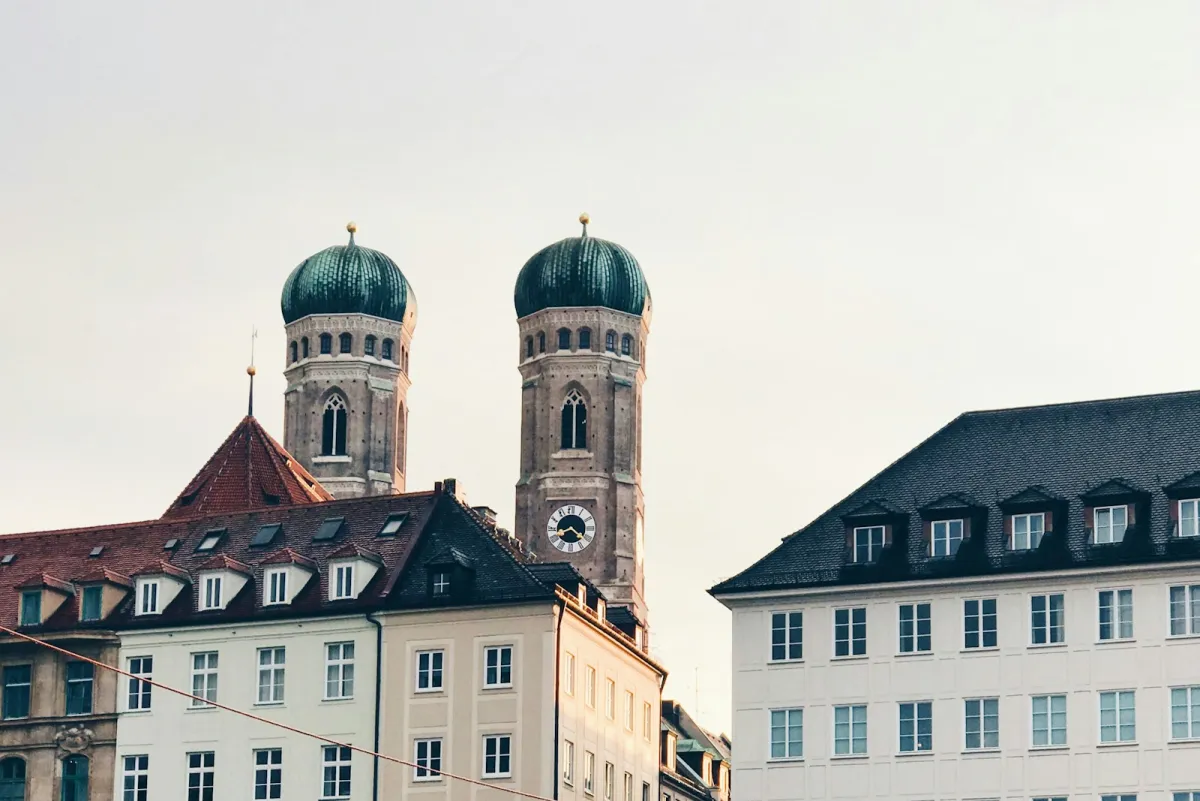
Munich is the German city that makes the most financial sense and the least, at the same time. It has the strongest job market in the country, the highest salaries, and BMW, Allianz, Munich Re, Google, Apple and Microsoft all running major operations here. It also has the most expensive, most brutal housing market in Germany, so a big Munich salary can vanish into rent faster than you expect.
If Berlin is the affordable, creative, English-friendly option, Munich is the opposite bet: earn more, pay more, and get a wealthy, safe, beautifully run city with the Alps an hour away. For the right professional it's the best deal in Germany. For the wrong one it's a financial squeeze with a nice view.
This is a guide to Munich the city, its districts, the housing fight, what it costs. For the Germany-wide machinery, the visa, the salaries by field, the tax, we've written those separately and linked them where they matter.
Key Facts at a Glance
| Detail | Info |
|---|---|
| Population | ~1.6 million, Germany's third-largest city |
| Vibe | Wealthy, traditional, corporate, safe, "Laptop and Lederhosen" |
| Main industries | Automotive, tech, insurance and reinsurance, life sciences |
| Main work visa | EU Blue Card, fast-track to permanent residency |
| Blue Card salary threshold (2026) | €50,700, or €45,934 for shortage occupations and recent graduates |
| Job-seeker route | Opportunity Card (Chancenkarte), needs €1,091/month in proven funds |
| Transport pass | Deutschlandticket, €63/month, valid nationwide |
| The hard part | Housing. Germany's tightest and priciest market |
| Best for | High earners in tech, engineering, finance and management |
Why Munich, and Why Not
Munich's case is simple: this is where the money and the blue-chip jobs are. It anchors Germany's automotive and insurance industries, it's become the country's leading city for startups and venture capital, and the big US tech firms all have a Munich presence. Salaries run higher here than anywhere else in Germany, and the city itself is spotless, green, exceptionally safe, and sits on the doorstep of the Alps and the Bavarian lakes.
The catch is cost, and it's a serious one. Munich is the most expensive city in Germany to live in, and the gap is almost entirely rent. A strong salary that would make you comfortable in Leipzig or even Berlin can feel tight in Munich once housing is paid. Bavaria is also more conservative and more traditional than Berlin, and while English works fine in the international companies, daily life leans more German than in the capital.
So the honest framing: Munich rewards an in-demand, well-paid profile and punishes a modest one. Our guide to the best German cities sets it against Berlin, Frankfurt, Hamburg and the cheaper options.
The Districts: Where to Actually Live
- Schwabing: the classic desirable district, central, lively, full of cafes and young professionals, and priced accordingly.
- Maxvorstadt: the university and museum quarter, central and buzzing, popular with academics and international arrivals.
- Neuhausen-Nymphenburg: greener and calmer, next to the Nymphenburg Palace park, a favourite with families.
- Haidhausen: the "French Quarter", elegant and walkable, east of the river.
- Pasing and the outer ring (Aubing, Allach, Riem): where the rent finally eases, at the cost of a longer commute into the centre.
As anywhere in Munich, the more central and the more established the district, the higher the rent. The trade you're making is always minutes-to-work against euros-per-month.
The Housing Reality
This is the part that decides whether a Munich move works. The city has Germany's highest rents and a chronic shortage of apartments, so a good listing draws a crowd of applicants and landlords can be extremely selective.
A few things to expect:
- The highest rents in Germany. Budget more for a one-bedroom than you would in any other German city, and treat the search as a serious project rather than an afterthought.
- The kitchen surprise. Many German rentals come with no fitted kitchen at all. The previous tenant took theirs, and you're expected to buy and install one, or negotiate to buy theirs.
- Cold versus warm rent. Advertised "cold" rent excludes heating and utilities; the "warm" figure is what you actually pay.
- The document pile. Landlords want proof of income, a credit report (SCHUFA) you won't have on arrival, and often several months' deposit. Start in a furnished sublet and hunt for the permanent place once you're on the ground.
The mechanics are the same across the country, and our guide to renting in Germany walks through contracts, deposits and the SCHUFA. Munich simply runs that system at the highest difficulty and the highest price.
Getting In: Visa Routes
Munich uses the same national routes as the rest of Germany. Two matter most.
The EU Blue Card is the main route for qualified professionals. For 2026 the salary threshold is €50,700 a year, dropping to €45,934 for shortage occupations (which include most tech and engineering roles) and for graduates in their first three years. Given Munich's salary levels, clearing that bar is rarely the obstacle here that it can be elsewhere. The Blue Card also comes with a fast track to permanent residency, and our EU Blue Card guide covers the timeline and the family rules.
If you don't yet have a job offer, the Opportunity Card (Chancenkarte) lets eligible non-EU professionals come to Germany for up to a year to job-hunt, provided you can show about €1,091 a month in funds through a blocked account or a part-time job. Our Opportunity Card guide explains the points system and who qualifies.
What You'll Earn and Spend
Munich pays the best salaries in Germany, meaningfully above the national level, which is the whole reason to accept its costs. For what specific fields pay, our Germany salary guide breaks it down by industry rather than by city.
On the spending side, Munich is the country's priciest city, and again it's rent doing almost all of the work. Groceries, transport and eating out are broadly in line with the rest of western Germany; it's the housing line that makes the Munich budget look different. Our cost of living in Germany guide has the monthly breakdowns.
One number to internalise early: German health insurance is mandatory and charged as a percentage of your salary, not a flat premium, so budget for it as a payroll deduction.
Getting Around
You will not need a car in Munich, and most residents get by without one.
The Deutschlandticket costs €63 a month and covers all local and regional public transport across the whole of Germany, so the same pass that gets you to work also gets you to Nuremberg or Salzburg on a regional train. Munich's U-Bahn, S-Bahn, tram and bus network is dense and reliable, and the city is flat and very bikeable. For getting further afield, Munich Airport is one of Europe's best-connected hubs, and Austria and the Alps are barely an hour away.
For a lot of people that Alpine proximity is the quiet clincher: you can be skiing or hiking on a Saturday morning without it being an expedition.
The Catch
Munich asks for a strong salary and gives you a superb city in return, but the entry cost is real. The housing search is the hardest in Germany and can be demoralising before it works out. Bavaria's traditionalism takes some adjusting for people expecting Berlin's anything-goes feel. And while you can work in English, daily life rewards German sooner here than in the capital, so our tips for learning German are worth starting early.
The German directness and the genuinely protected work-life balance apply here as everywhere; our guide to German work culture covers what that means day to day. If Munich's costs give you pause, Berlin is the cheaper, more international alternative, at lower salaries.
Frequently Asked Questions
Is Munich a good place for expats to live? Yes, if you have a strong, in-demand salary. Munich has Germany's best job market, highest pay, and a safe, high-quality city with the Alps nearby. The catch is that it's also Germany's most expensive city, with the tightest housing market, so it rewards high earners and squeezes lower ones.
How much do you need to earn for an EU Blue Card in Munich? The 2026 EU Blue Card threshold is €50,700 a year, or €45,934 for shortage occupations (including most tech and engineering roles) and for recent graduates. Munich's salary levels mean clearing it is rarely the problem here.
Why is Munich so expensive? Almost entirely because of rent. Munich has the highest housing costs in Germany and a chronic shortage of apartments. Everyday costs like groceries and transport are similar to the rest of western Germany; it's housing that makes the difference.
Do I need to speak German to live in Munich? You can work in English at Munich's international and tech companies, but daily life leans more German than in Berlin, and Bavaria is more traditional. Learning German raises the ceiling on both your career and your social life.
Munich or Berlin, which is better for expats? Munich pays more and offers a wealthier, safer, Alpine-adjacent city, but costs far more and is harder to find housing in. Berlin is cheaper, more international and more creative, at lower salaries. It comes down to whether you're optimising for take-home pay and lifestyle or for cost and openness.
How much is public transport in Munich? The Deutschlandticket is €63 a month and covers all public transport nationwide, including Munich. The city's network is excellent and most residents don't own a car.
Munich is the highest-ceiling city in Germany and the least forgiving on cost. Come with an in-demand skill and a strong offer, get your housing search started before you arrive, and it's arguably the best quality of life in the country. Come underfunded and the rent will define your experience.
At Move2Europe, we help skilled professionals through the whole move, from the visa route to the details nobody warns you about.
Book a consultation and let's figure out your fastest path to Munich.
Official sources:
- Make it in Germany, EU Blue Card 2026 salary thresholds
- Make it in Germany, Opportunity Card (Chancenkarte) requirements
- Deutschlandticket, nationwide transport pass
- Landeshauptstadt München, official City of Munich portal