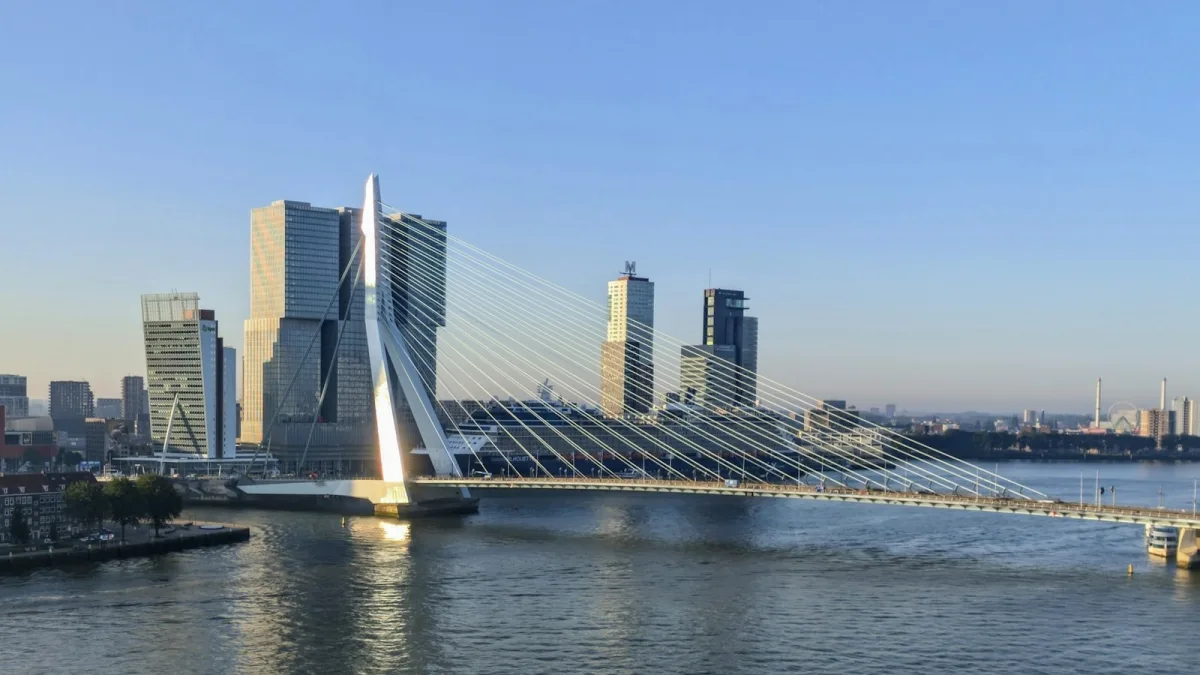
Rotterdam is the Dutch city that looks nothing like the postcards. Flattened in the war and rebuilt from scratch, it skipped the gabled canals for glass towers, a cable-stayed bridge and the kind of skyline the Dutch otherwise don't do. For a professional, that reinvention is the point: this is a working port city with a serious job market, far more space and noticeably lower rents than Amsterdam, and the same Dutch quality of life.
The pitch is simple. You get the Netherlands, the 30% ruling, the cycling, the English-speaking workplaces, without Amsterdam's tourist crush and its brutal housing prices. The trade is that Rotterdam is less immediately charming and more businesslike, which plenty of people end up preferring.
This guide is about Rotterdam the city, its districts, the housing search, what you'll earn and keep. For the Netherlands-wide machinery, the visa, the 30% ruling, the freelance route, we've written those separately and linked them where they matter.
Key Facts at a Glance
| Detail | Info |
|---|---|
| Population | ~660,000 in the city, the Netherlands' second-largest |
| Vibe | Modern, industrial, international, businesslike, unpretentious |
| Main industries | Port and logistics, energy transition, engineering, tech |
| Main work visa | Highly Skilled Migrant permit, via an IND-recognised sponsor |
| Tax perk | The 30% ruling, tapering to 27% from 2027 |
| English | Widely spoken, workplaces in many sectors run in English |
| Getting around | Metro, tram, trains and bikes. No car needed |
| The draw | Notably cheaper and roomier than Amsterdam |
| Best for | Engineering, logistics, energy and tech professionals |
Why Rotterdam, and Why Not
Rotterdam's economy starts with the port, the largest in Europe, which anchors a deep logistics, trade and engineering job market. But the city has spent years diversifying: it's now one of Europe's centres for the energy transition, with real activity in hydrogen, offshore wind and the circular economy, and a growing tech and digital scene. Erasmus University keeps a steady supply of graduates and gives the city an academic backbone. For the right profile, the work is here.
The lifestyle case is about space and value. Rents sit well below Amsterdam's, you get more apartment for the money, and the city is less crowded and less touristy. English is widely spoken, the workplaces in international sectors run in English, and the Randstad location puts The Hague, Amsterdam and Utrecht within a short train ride, with Brussels and Paris not much further.
The honest downsides: Rotterdam is less pretty and less cosy than the classic Dutch cities, the weather is the usual grey and wet, and the housing market, while cheaper than Amsterdam, is still competitive. For how it sits against the capital and the other Dutch options, our Amsterdam city guide and our guide to the Netherlands for professionals are the companions to this one.
The Districts: Where to Actually Live
- Centrum: the rebuilt core, modern and central, good for young professionals who want to be in the middle of things.
- Kop van Zuid: the "Manhattan on the Maas", high-rise riverfront living with the best skyline views, newer and pricier.
- Kralingen: green and leafy by the lake and the Kralingse Bos, next to Erasmus University, a favourite with families and academics.
- Delfshaven: one of the few corners that survived the war, with historic canal-side Dutch character.
- Hillegersberg: quiet and upscale to the north, larger homes and good schools, popular with higher-earning families.
As anywhere, central and riverfront means pricier. The usual trade applies: minutes to work against euros per month.
The Housing Reality
Housing is easier here than in Amsterdam, but it's still the hardest part of the move. Demand is high and good listings go quickly, so preparation and speed both matter.
A few things to know:
- Register to get a BSN. If you're staying longer than four months, you register with the municipality (gemeente) to get your BSN, the citizen number you need for a job, a bank account and health insurance. Confirm your rental allows registration before you sign, because some don't, which makes them nearly useless.
- Furnished, semi-furnished, or bare. Dutch listings distinguish between bare, semi-furnished (gestoffeerd) and fully furnished. Read carefully so you know what actually comes with the place.
- Move fast on good listings. The cheaper rents pull demand, so a strong apartment can be gone in a day. A short-term or furnished place first, then a proper search once you're on the ground, is how most people manage it.
Getting In: Visa Routes
For most non-EU professionals, the route into Rotterdam is the Highly Skilled Migrant (kennismigrant) permit. The key feature is that your employer has to be an IND-recognised sponsor, and the employer files the application, which makes it one of the faster work-permit processes in Europe once you have the offer. The main condition is a gross salary above the annual threshold the IND sets.
Because the permit hinges on a sponsoring employer, the first real step is landing the job. Our Highly Skilled Migrant Visa Netherlands FAQ walks through the sponsor rules, the 2026 salary thresholds and family members, and the freelancing and ZZP guide covers the self-employed path.
What You'll Earn and Keep
Rotterdam salaries are solid by European standards, strongest in engineering, logistics, energy and tech, though still below equivalent US packages in raw terms. The gap narrows once you factor in the 30% ruling and the lower cost base.
The 30% ruling is the headline tax perk. If you qualify, your employer can pay up to 30% of your gross salary as a tax-free allowance for up to five years. Two things a lot of older articles get wrong: the rate is 30% through 2026, then steps down to 27% from 2027 for new claimants, and the benefit is capped at a salary of €262,000. Our Netherlands 30% ruling 2026 guide has the full current picture, including what it means for US citizens still filing with the IRS.
On spending, the Rotterdam advantage is real: rents are a clear step below Amsterdam's and you get more space for the money. Dutch health insurance is mandatory, averaging around €157 a month for the basic package in 2026, on top of an annual deductible before most non-GP care is covered.
Getting Around
You will not need a car in Rotterdam. It's one of only two Dutch cities with a metro, backed by trams, buses, trains and the waterbus across the river, and like everywhere in the Netherlands it's built for bikes, with cycling infrastructure that makes a bike the default for most trips. The central station is a striking piece of modern architecture and a major rail hub, so Amsterdam, The Hague and Utrecht are a short ride away, and Brussels and Paris are direct.
The Catch
Rotterdam gives you a real job market, far more space and lower costs than Amsterdam, and the full Dutch package, and asks you to trade some old-world charm for a modern, working city. The housing search is still the part that tests people, so start it before you arrive. And while daily life runs fine in English, picking up some Dutch pays off socially over the long run, which our guide to Dutch culture gets into.
If the capital's prices put you off but you want to stay in the Randstad, The Hague is the other strong option, and our guide to the top European cities for expats sets the Dutch cities against the rest of Europe.
Frequently Asked Questions
Is Rotterdam a good place for expats to live? Yes, especially for professionals in engineering, logistics, energy and tech. It has a strong job market anchored by Europe's biggest port, English-friendly workplaces, and a noticeably lower cost of living than Amsterdam with more space. The main trade-off is a more modern, businesslike feel than the classic Dutch cities.
Is Rotterdam cheaper than Amsterdam? Yes, noticeably. Rents are a clear step lower and you get more apartment for the money, which is a big part of why professionals choose Rotterdam over the capital. The housing market is still competitive, just less brutal than Amsterdam's.
How do I get a work visa for Rotterdam? Most non-EU professionals come on the Highly Skilled Migrant permit, where an IND-recognised employer sponsors and files the application. It's one of Europe's faster routes once you have a qualifying job offer above the salary threshold. Our Highly Skilled Migrant Visa Netherlands FAQ covers the detail.
Do I need to speak Dutch to live in Rotterdam? Not to get started. English is widely spoken and international workplaces run in English, so you can work, bank and settle in without Dutch at first. Learning some still helps socially and for the long term.
Do I need a car in Rotterdam? No. Rotterdam has a metro, trams, buses, trains and a waterbus, and it's built for cycling. Most residents get around by bike and public transport, and the central station connects quickly to the rest of the Netherlands and Europe.
Rotterdam is the pragmatic Dutch move: the job market and the lifestyle of the Netherlands with more room and lower rents than the capital. Come with an in-demand skill, start the housing search early, and it's one of the best-value relocations in the country.
If you're weighing it against the other Dutch cities, our Amsterdam and The Hague guides lay out the alternatives.
Official sources:
- IND, highly skilled migrant, permit conditions and the recognised-sponsor rule
- Rijksoverheid, Dutch basic health insurance and the 2026 premium
- City of Rotterdam, official municipal portal for registration and residents