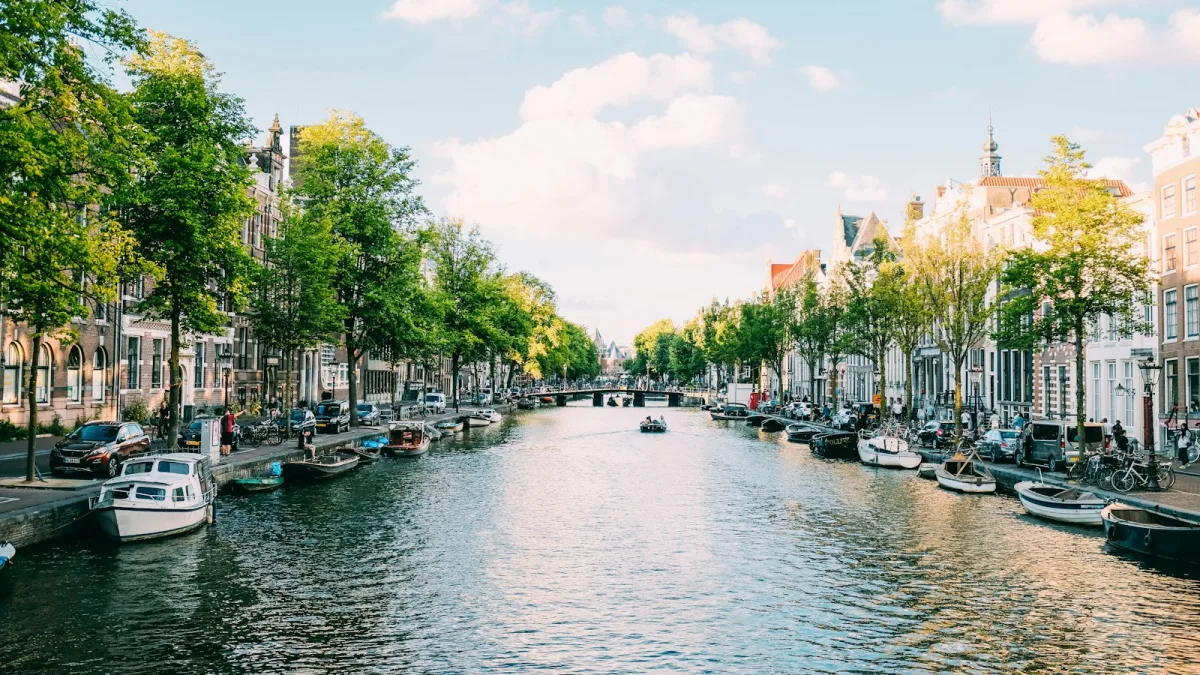
Amsterdam is one of the easiest cities in Europe for an American to land in, and one of the hardest to find an apartment in. Almost everyone speaks English, the big employers hire in English, and the whole place is built around bikes rather than cars. Then you start looking for somewhere to live, and the other side of the city shows up fast.
That tension runs through the whole Amsterdam decision. It's a genuine international hub with a serious tech and finance job market, a tax break that softens the gap with US pay, and a "work to live" culture that most newcomers fall for. It's also small, crowded, and short of housing, so the thing that makes people want to move here is the same thing that makes arriving a scramble.
This guide is about Amsterdam the city, its districts, the housing fight, what you'll earn and keep. For the Netherlands-wide machinery, the visa, the 30% ruling, the freelance route, we've written those separately and linked them where they matter.
Key Facts at a Glance
| Detail | Info |
|---|---|
| Population | ~930,000 in the city, ~2.5 million in the metro area |
| Vibe | International, liberal, bike-first, "work to live" |
| Main industries | Tech and fintech, finance, logistics, creative, healthcare |
| Main work visa | Highly Skilled Migrant permit, via an IND-recognised sponsor |
| HSM salary threshold (2026) | €5,942/month if you're 30+, €4,357/month if under 30 (excl. holiday allowance) |
| Tax perk | The 30% ruling, tapering to 27% from 2027 |
| English | Among the highest proficiency in the world, near 90% |
| Getting around | World-class cycling plus GVB metro and trams. No car needed |
| The hard part | Housing. Severe shortage, high rents, fierce competition |
| Best for | Tech, finance and healthcare professionals who have an employer sponsor |
Why Amsterdam, and Why Not
The case for Amsterdam is strong. It's one of Europe's most international cities, with a large English-speaking professional community and a job market that leans on tech, fintech, finance and logistics. The Netherlands consistently ranks at or near the top of the world for English proficiency, so you can work, bank, see a doctor and build a social life without Dutch, at least at first. Add the near-universal cycling, the short working week culture, and a location that puts Paris, Berlin and London within a couple of hours, and the appeal is obvious.
The case against is mostly one word: housing. Amsterdam has a chronic shortage of homes and one of the tightest rental markets in Europe, so a good listing draws a crowd and prices sit high. The weather is grey and wet for a good chunk of the year. And while daily life works in English, the Netherlands is still a place where learning some Dutch pays off socially over the long run, which our guide to Dutch culture gets into.
So the honest framing: Amsterdam is one of the softest landings in Europe for a US professional on the career and language side, and one of the roughest on the housing side. Go in knowing both.
The Districts: Where to Actually Live
- Jordaan: the postcard-Amsterdam district, narrow canals, cafes and small shops, central and expensive.
- De Pijp: lively and young, built around the Albert Cuyp market, popular with new arrivals and internationals.
- Oud-West and De Baarsjes: trendy, walkable, full of young professionals, a bit less pricey than the centre.
- Amsterdam-Zuid (Oud-Zuid): upmarket and green, next to the museums and the Zuidas business district, a favourite with families and higher earners.
- Amsterdam-Noord: across the IJ by a free ferry, formerly industrial, now the creative up-and-coming side with more space for the money.
- Amstelveen: the suburb just south, home to a large international community, several international schools and an easy run to Schiphol. A common landing spot for families.
The rule is the same everywhere in Amsterdam: the more central and characterful the neighbourhood, the higher the rent. Many newcomers start wherever they can get a foot in the door and move once they know the city.
The Housing Reality
This is the part that decides whether an Amsterdam move goes smoothly. The city is short of homes, demand far outstrips supply, and landlords can afford to be picky. Expect competition for anything decent, and expect to move quickly when something comes up.
A few things to know before you start:
- The shortage is real. Good listings get many applicants within hours. Line up your documents in advance and be ready to decide fast.
- Rents are regulated, up to a point. The Affordable Rent Act, in force since July 2024, extended the national points system (the WWS) to mid-market rentals. A home's points, based on size, energy label, facilities and property value, set a maximum legal rent for everything up to the mid-market ceiling (186 points, around €1,185 a month in 2025). Above that ceiling, rents are free-market and Amsterdam's are among the highest in the country.
- Furnished, unfurnished, or "upholstered". Dutch listings distinguish between bare, semi-furnished (gestoffeerd, meaning floors and curtains) and fully furnished. Read carefully so you know what actually comes with the place.
- Register your address. You must register (inschrijven) at your address with the municipality to get a BSN, the citizen number you need for a job, a bank account and health insurance. Some rentals don't permit registration, which makes them close to useless. Confirm registration is allowed before you sign.
A practical approach that works for a lot of people: take a short-term or furnished place first, get registered and settled, then hunt for the permanent home once you're on the ground and can view in person.
Getting In: Visa Routes
For most US professionals, the route into Amsterdam is the Highly Skilled Migrant (kennismigrant) permit. The key feature is that your employer has to be an IND-recognised sponsor, an authorised list the Dutch immigration service maintains, and the employer files the application. That makes it one of the faster work-permit processes in Europe once you have the offer, since recognised sponsors get an expedited track.
The main condition is salary. For 2026, the gross monthly thresholds (excluding the standard 8% holiday allowance) are:
- €5,942 a month if you're 30 or older.
- €4,357 a month if you're under 30.
- €3,122 a month under the reduced criterion for recent graduates and orientation-year holders.
Because the permit hinges on a sponsoring employer, the practical first step is landing the job, not filing paperwork. Our Highly Skilled Migrant Visa Netherlands FAQ walks through the sponsor rules, timelines and family members, and our guide to the Netherlands for professionals covers the wider picture. If you're planning to work for yourself instead of an employer, the freelancing and ZZP guide covers that path.
What You'll Earn and Keep
Amsterdam salaries are solid by European standards, especially in tech, fintech and finance, though still below equivalent US packages in raw terms. The gap narrows once you factor in the 30% ruling and the things you no longer pay for out of pocket.
The 30% ruling is the headline tax perk. If you qualify, your employer can pay up to 30% of your gross salary as a tax-free allowance for up to five years, which noticeably lifts your take-home. Two things to keep in mind, because a lot of older articles get them wrong:
- The rate is 30% through 2026, then steps down to 27% from 1 January 2027 for new claimants and anyone who started the ruling in 2024 or later.
- The benefit is capped at a salary of €262,000, and the partial non-resident status that used to shield foreign assets from Dutch wealth tax was scrapped for new joiners in 2025.
Our Netherlands 30% ruling 2026 guide has the full current picture, including the salary thresholds to qualify and what it means if you're a US citizen still filing with the IRS.
Healthcare, Schools and Settling In
Dutch healthcare is high quality, and it's mandatory. Every resident must take out basic health insurance (basisverzekering) within four months of arriving. In 2026 the basic package averages around €157 a month, on top of an annual deductible (eigen risico) of €385 before most non-GP care is covered. Visits to your GP (huisarts) don't count against the deductible, and the huisarts is the gatekeeper for referrals to specialists.
For families, the Netherlands is a genuinely good place to raise children, with a strong safety record and a culture that gives kids a lot of independence early. Amsterdam and nearby Amstelveen have several international schools teaching in English, which fill up, so apply early. Dutch state schools are excellent and free, but instruction is in Dutch.
Two admin basics anchor everything else: registering with the municipality to get your BSN, and opening a Dutch bank account, both of which you'll want sorted in your first weeks.
Getting Around
You will not need a car in Amsterdam, and most residents don't have one. The bike is the default, and the city's cycling infrastructure is the best in the world, with dedicated lanes on nearly every street and parking for tens of thousands of bikes. Buy a decent second-hand bike and a very good lock early on.
When you're not cycling, the GVB metro, tram and bus network is dense and reliable, and the national rail system puts Rotterdam, Utrecht and The Hague within an easy train ride. Schiphol, one of Europe's biggest airports, is fifteen minutes from the centre by train, which is part of why the city works as a base for the rest of Europe.
The Catch
Amsterdam gives you an easy linguistic landing, a real job market and a lifestyle most people love, and asks for patience on housing and a tolerance for grey skies in return. The apartment hunt is the single hardest part of the move and can be discouraging before it works out, so treat it as a project and start before you arrive.
The other quiet adjustment is that the soft landing can make it easy to stay in an expat bubble for years. Everything works in English, so there's little forcing you to learn Dutch, and the people who end up happiest here tend to pick up at least some of the language and some local habits anyway. If Amsterdam's housing squeeze gives you pause, our city guides to Berlin and Munich lay out how Germany's biggest hubs compare.
Frequently Asked Questions
Is Amsterdam a good place for expats to live? Yes, for most professionals it's one of the easiest cities in Europe to settle into. Almost everyone speaks English, the big tech and finance employers hire internationally, and the lifestyle is excellent. The main drawback is the housing market, which is expensive and very competitive.
How much do you need to earn to move to Amsterdam on a work visa? For the 2026 Highly Skilled Migrant permit, the gross monthly salary threshold is €5,942 if you're 30 or older and €4,357 if you're under 30, excluding the 8% holiday allowance. A recent-graduate reduced rate of €3,122 also exists. Your employer must be an IND-recognised sponsor.
Is it hard to find housing in Amsterdam? Yes. Amsterdam has a serious housing shortage, so good rentals get many applicants fast and prices are high. Many newcomers take a short-term or furnished place first, then search for something permanent once they're in the city. Always confirm you're allowed to register your address before signing.
Do I need to speak Dutch to live in Amsterdam? Not to get started. English proficiency in the Netherlands is among the highest in the world, and you can work, bank and see a doctor in English. Learning some Dutch still pays off socially and for the long term, especially outside the international bubble.
What is the 30% ruling and does it still exist in 2026? It's a tax break that lets qualifying skilled migrants receive up to 30% of their gross salary tax-free for up to five years. It still applies at 30% through 2026, then drops to 27% from January 2027 for new claimants. It meaningfully boosts your take-home pay.
Do I need a car in Amsterdam? No. Amsterdam is built for bikes and has the best cycling infrastructure in the world, backed by an excellent metro, tram and train network. Most residents get around without a car, and Schiphol Airport is fifteen minutes from the centre by train.
Amsterdam is one of the friendliest cities in Europe for an American to build a life in, once you're through the door. Line up an employer who can sponsor you, get the housing search moving before you land, and the rest of the move is smoother here than almost anywhere else on the continent.
At Move2Europe, we help skilled professionals through the whole move, from working out the visa route to the details nobody warns you about.
Book a consultation and let's figure out your fastest path to Amsterdam.
Official sources:
- IND, required amounts income requirements, 2026 Highly Skilled Migrant salary thresholds
- IND, highly skilled migrant, permit conditions and recognised-sponsor rule
- Rijksoverheid, Dutch basic health insurance and 2026 premium
- Volkshuisvesting Nederland, the Affordable Rent Act and the WWS points system
- City of Amsterdam, official municipal portal for registration and residents