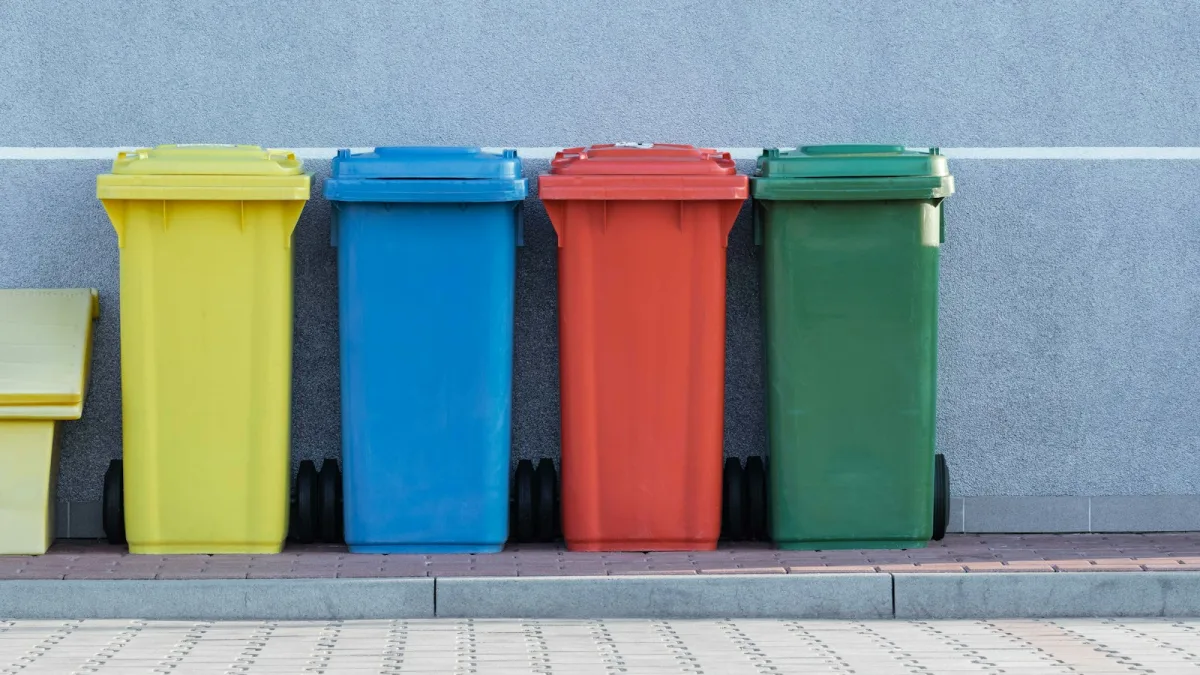
Few things mark you out as new to Germany faster than putting the wrong thing in the wrong bin. Waste separation, Mülltrennung, is close to a national sport here, and Germany runs one of the highest recycling rates in the European Union on the back of it. For a newcomer it looks like a wall of colour-coded bins and unspoken rules, but the system is logical once someone explains it, and getting it right is a small, satisfying part of settling in.
This is the guide that explains it: which bin takes what, how the bottle deposit works, where the things that don't go in any bin actually go, and how not to annoy your neighbours or earn a fine. The exact colours and collection days vary a little by city, but the logic below holds everywhere.
Germany's Bins at a Glance
| Bin | What it takes | Common examples |
|---|---|---|
| Blue (Papier) | Paper and cardboard | Newspapers, magazines, letters, clean boxes, egg cartons |
| Yellow (Gelbe Tonne / Gelber Sack) | Lightweight packaging | Plastic wrap and tubs, cans, foil, drink cartons (Tetra Pak) |
| Brown or green (Biotonne) | Organic waste | Fruit and veg scraps, coffee grounds and filters, garden waste |
| Black or grey (Restmüll) | Everything else | Nappies, ash, pet litter, dirty or mixed materials |
| Glass banks (by colour) | Non-deposit glass | Wine and spirit bottles, jars, sorted white, green and brown |
Why Germans Take Waste Separation Seriously
Germany built its recycling system over decades, and it works because households do the first sort rather than a machine at the end. The yellow bin feeds the packaging-recycling system, the blue bin keeps paper clean enough to actually reuse, and the brown bin turns food and garden waste into compost and biogas. Put the wrong things in, and the whole batch can be downgraded or sent to incineration, which is why your neighbours care. It isn't just tidiness; it's the mechanism doing its job.
The Bin Colours and What Goes Where
The core bins are usually in or behind your building, managed by the Hausverwaltung (property management), who often post the local rules in the bin area.
- Blue, for paper. Newspapers, magazines, letters, cardboard. It has to be clean: a greasy pizza box or a used paper towel goes in the residual bin, not here. Flatten boxes to save space.
- Yellow, for packaging. This one confuses everyone. It's for packaging made of plastic, metal or composite, so plastic tubs, yoghurt pots, cans, foil and drink cartons, but not plastic objects that aren't packaging. A yoghurt pot goes in; a broken plastic toy does not. Separating a metal lid from a plastic pot helps the sorting.
- Brown or green, for organics (Biotonne). Food scraps, coffee grounds and filters, teabags, garden waste. Never line it with a plastic bag, including the "compostable" ones, which the system doesn't accept.
- Black or grey, for residual (Restmüll). Everything that doesn't fit the others: nappies, ash, pet litter, dirty or mixed items. This is the catch-all, not the default, so use it last.
Non-deposit glass doesn't go in any household bin. Wine bottles, spirit bottles and jars go to the public glass banks on the street, sorted into white, green and brown.
The Pfand Deposit System
The first odd thing you'll notice is people carrying bags of empty bottles back to the supermarket. That's Pfand, Germany's bottle-deposit system, and it's not recycling in the bin sense: you pay a small deposit when you buy the drink and get it back when you return the empty.
The quick version: single-use cans and plastic bottles carrying the DPG logo are €0.25, and reusable (Mehrweg) glass and thick plastic bottles are €0.08 to €0.15. Feed them into the machine (Pfandautomat) at the supermarket, uncrushed so it can read them, and it prints a voucher you redeem at the till. Our full guide to the German Pfand system covers which bottles qualify and how to spot them.
Waste That Doesn't Go in the Bins
Several everyday things must never go in the household bins, for safety or environmental reasons:
- Electronics and batteries. Return old electronics to electronics shops or a municipal recycling centre (Wertstoffhof). Batteries go in the small collection boxes near the entrance of most supermarkets, never in the regular trash.
- Bulky waste (Sperrmüll). Furniture, mattresses and the like need a scheduled collection from your local provider, often free a few times a year. Leaving them on the street without a booked pickup can get you fined.
- Clothing. Usable clothes go in the Altkleidercontainer on the street or to a charity, not the residual bin.
- Hazardous items. Paint, chemicals, fluorescent tubes and similar go to the Wertstoffhof, which has a dedicated drop-off.
Your Collection Schedule
Each address has an Abfallkalender, a waste calendar that lists the pickup day for each bin type on your street. The bins are rolled out to the collection point the evening before, not the morning of, and collection days differ by neighbourhood and by city. Most municipalities now publish the calendar online or as an app, so look up your street once you've registered your address. In an apartment building, the Hausverwaltung usually handles the bins and posts the rules in the bin room.
Getting It Wrong: Fines and Etiquette
Mis-sorting is first a social issue and second a financial one. In a shared building, consistently wrong bins get noticed, and the whole building can be charged if a bin is rejected for contamination. Beyond that, the rules are set by each federal state (Bundesland), and the fines for things like wrong disposal or dumping bulky waste run from token amounts into the hundreds of euros or more, depending on the state and the offence. Nobody is inspecting your yoghurt pot at home, but illegal dumping and badly contaminated bins are genuinely penalised, so it pays to learn the system early. When in doubt, a neighbour is usually happy to point you to the right bin.
Frequently Asked Questions
How does recycling work in Germany? Households separate waste into colour-coded bins: blue for paper, yellow for packaging, brown or green for organic waste, and black or grey for everything else. Non-deposit glass goes to street glass banks, and drink bottles with a deposit go back to the supermarket. Doing the sort at home is what makes the system work.
What goes in the yellow bin in Germany? The yellow bin (Gelbe Tonne or Gelber Sack) is for lightweight packaging made of plastic, metal or composite material: plastic tubs and wrap, yoghurt pots, cans, foil and drink cartons. It is only for packaging, so non-packaging plastic like a broken toy belongs in the residual bin.
What is Pfand and how does it work? Pfand is Germany's bottle-deposit system. You pay a deposit when you buy certain drinks, €0.25 on single-use cans and bottles with the DPG logo and €0.08 to €0.15 on reusable bottles, and get it back by returning the empties to a machine at the supermarket, which prints a voucher you redeem at the till.
Can you be fined for sorting trash wrong in Germany? Yes, though nobody checks your bins at home. Fines are set by each federal state and apply mainly to things like illegal dumping or badly contaminated bins, running from small amounts into the hundreds of euros or more. In apartment buildings a bin rejected for contamination can mean a charge for everyone.
Where do batteries and electronics go? Not in the household bins. Batteries go in the collection boxes near the entrance of most supermarkets, and old electronics go back to electronics shops or to a municipal recycling centre (Wertstoffhof). Paint and other hazardous items also go to the Wertstoffhof.
When are the bins collected? Each address has a waste calendar (Abfallkalender) with the pickup day for each bin type, which varies by street and city. Put the bins out the evening before collection, not the morning of. Most cities publish the schedule online or as an app.
Mülltrennung looks like a test when you arrive and becomes second nature within a month. Learn the four bins, keep a bag for your Pfand bottles, and check your street's waste calendar once you've registered, and you'll be sorting like a local before long. For the related settling-in admin, our guide to renting in Germany covers the contracts and the registration that come first.
Official sources:
- Umweltbundesamt, the German Environment Agency on waste and recycling
- Bundesministerium für Umwelt (BMUV), the federal environment ministry on the circular economy