Almost everyone who thinks about Austria thinks about Vienna, and for good reason. But Austria is a country of nine states, and the difference between living in the imperial capital and living in a tech city an hour from the Alps is bigger than most people arriving from the US expect.
Vienna is the obvious choice, and often the right one. It's also the most expensive, the most competitive for housing, and the least "Austrian" in the sense that so much of daily life runs in English. Move two hours in any direction and the country changes character, the rents drop, and German stops being optional.
Here's an honest look at where you'd actually land, and what each city trades for what.
Key Facts at a Glance
| Thing | What to know |
|---|---|
| Largest cities | Vienna (~2m), Graz (~300k), Linz (~200k), Salzburg, Innsbruck |
| Vienna's liveability | Held the EIU's global top spot for three years, joint second in 2025 |
| National transport pass | Klimaticket, €1,400/year for the whole country |
| Vienna city transport | €467/year, up from €365 for the first time since 2012 |
| Language | German. English gets you far in Vienna, less so elsewhere |
| Main work visa | EU Blue Card or the Red-White-Red Card |
| US tax angle | The Foreign Earned Income Exclusion covers up to $132,900 in 2026 |
| The trade-off | The further from Vienna, the more German you need and the more Austria you get |
Vienna: The International Capital
If you're moving for a career in an international organisation, finance, tech, or research, Vienna is usually the first and last city on the list.
It held the top spot in the Economist Intelligence Unit's global liveability ranking for three straight years, and slipped only to joint second in 2025. It's home to a UN headquarters and OPEC, which sustains a large diplomatic and international-business community, and it runs more of its professional life in English than anywhere else in the country. The work-life balance is real: 25 to 30 days of paid leave is standard, and employers expect you to take it.
Vienna is its own topic, and we've written it up in full. Our Vienna guide covers the visa routes, salaries, cost of living, healthcare and tax in detail. This piece is about the rest of the country, because for a lot of people the smarter move is somewhere Vienna's shadow hides.
Graz: The Design and Tech Second City
Austria's second-largest city is the one most Americans have never heard of and most would probably enjoy more than they expect.
Graz is a university town at its core, with two big universities feeding a young, educated population, and it has quietly become a serious engineering and technology cluster. The region around it is a centre of automotive development and contract manufacturing, the kind of work that doesn't make headlines but employs a lot of skilled people. UNESCO named it a City of Design, and the old town is a World Heritage site you get to live in rather than visit.
What you're trading against Vienna is international scale and English. Graz is more Austrian, more German-speaking in daily life, and smaller in job breadth. What you get back is a lower cost of living, a walkable historic centre, and a warmer, slower southern feel, closer to Slovenia and Italy than to the formality of the capital.
Linz: Industry Meets Digital Art
Linz is Austria's third city and its most interesting contradiction. It's a heavy-industry town, home to one of Europe's big steel producers and a large chemical sector, and at the same time it's a UNESCO City of Media Arts that hosts one of the world's leading festivals of technology and digital culture.
For a professional, that combination means real jobs. Industry and engineering anchor the economy, while the media-arts scene has pulled in a genuine tech and creative layer on top. Linz sits on the main rail line between Vienna and Salzburg, so neither is far.
It won't win a beauty contest against Salzburg, and it doesn't try to. Linz is a working city that has spent two decades reinventing its image, and it offers some of the best value of any Austrian city for someone who wants a real job and a real salary without Vienna's rents.
Innsbruck: The City in the Mountains
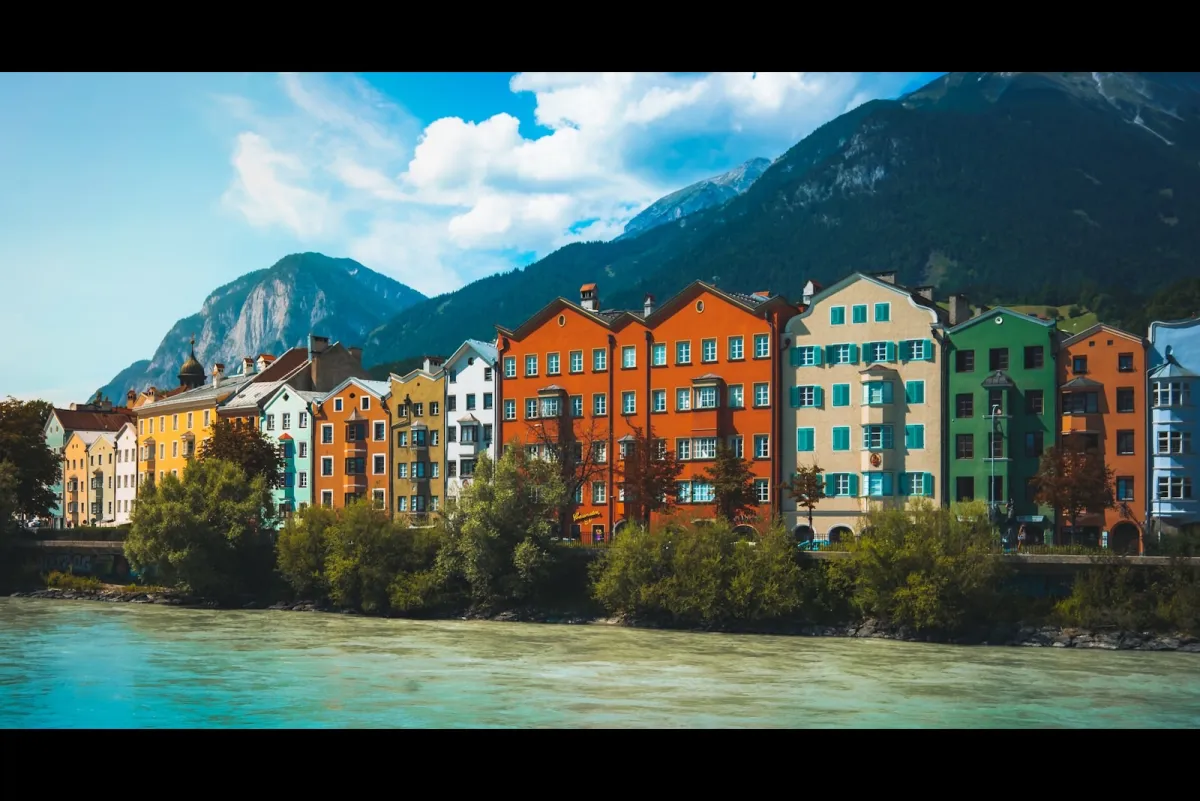
Innsbruck is the one that sells itself. It sits in a valley ringed by the Alps, and a cable car runs from the edge of the city centre up into the Nordkette range, so genuinely finishing work and being on a mountain the same evening is a normal thing here, not a holiday.
It's a smaller city, but a lively one, kept young by its university and a growing technology sector that has learned to use the lifestyle as a recruiting tool. It also sits at a crossroads: Germany, Switzerland and Italy are all close, which makes it a practical base for anyone who travels for work.
The trade-off is scale. The job market is narrower than Vienna's or Graz's, and if your field is specialised you may find fewer employers. But for people in tech or research who weight quality of life heavily, few places in Europe compete.
Salzburg: Culture and a Fast Train to Munich
Salzburg trades on Mozart and film-set scenery, and it's easy to write it off as a tourist town. That undersells it. It has a solid regional economy in manufacturing, services and, yes, tourism, and its real strategic advantage is location.
Salzburg sits right on the German border, with fast rail connections to Munich. That puts one of Germany's largest job markets within commuting distance while you live on the Austrian side, with the Austrian pace and the Austrian cost of living. For the right person that's a genuinely clever arrangement rather than a compromise.
The Resort Option: Arlberg and Kitzbühel
Not everyone moving to Austria wants a city at all. The mountain resorts, the Arlberg region around St. Anton and Lech, and Kitzbühel with its famous ski race, have become quiet magnets for executives, consultants and remote professionals who can work from anywhere and want to do it somewhere spectacular.
The Arlberg sits about two hours from Zurich, which makes it plausible for people tied to Swiss finance. Kitzbühel's international social scene creates its own networking world. Both are expensive, seasonal, and a long way from a normal job market, so this only works if your income doesn't depend on the local one. If the Alpine life is what's pulling you, our guide to relocating to the Austrian Alps goes deeper on how people actually make it work.
What It Costs, and the American Tax Angle
Austrian salaries look lower than American ones on paper, and then the full picture changes the maths.
The single best deal in the country is the Klimaticket, a national transport pass that gives you unlimited travel on public transport across all of Austria for €1,400 a year. Within Vienna, the city's own annual pass is €467, which rose from €365 in 2026 after holding the same price for thirteen years. Both are a fraction of what a car costs, and in most Austrian cities you genuinely don't need one.
Healthcare is public and heavily subsidised through payroll, so the American habit of budgeting hundreds of dollars a month for insurance and thousands for an emergency room visit simply doesn't translate. Those costs largely disappear, which is a big part of why a lower gross salary can leave you better off.
For US citizens there's also the tax side. The Foreign Earned Income Exclusion lets you exclude up to $132,900 of foreign-earned income from US federal tax in 2026, which for many people removes most or all of the double-taxation worry. It's not automatic and it's not the whole story, so it's worth proper advice, but it's a real and substantial relief.
Which City Fits You
A rough guide, once you strip away the postcards:
- Career reach and English: Vienna, then Graz.
- Best value with real jobs: Linz.
- Lifestyle and the outdoors: Innsbruck.
- A foot in the German job market: Salzburg.
- Remote and location-independent: the resorts, if your income travels with you.
The one rule that holds everywhere: the further you get from Vienna, the more your German matters and the more of the actual country you get in return.
Frequently Asked Questions
What is the best city to live in Austria for expats? Vienna for career reach, international community and English-friendly workplaces; it held the EIU's global liveability top spot for three years and was joint second in 2025. Graz and Linz offer better value with real job markets, while Innsbruck wins on outdoor lifestyle.
Do you need to speak German to live in Austria? In Vienna you can start in English, especially in international companies, and learn German as you go. Outside Vienna, in Graz, Linz, Salzburg and Innsbruck, German matters much sooner for both work and daily life. Long-term residence generally requires it.
How much is public transport in Austria? The Klimaticket covers unlimited national public transport for €1,400 a year. Vienna's own city pass is €467 a year as of 2026, with a discounted €300 version for under-26s. In most Austrian cities you can live comfortably without a car.
Is Austria cheaper than the United States? Salaries are lower in nominal terms, but heavily subsidised healthcare, cheap public transport and lower everyday costs often leave professionals better off. US citizens can also exclude up to $132,900 of foreign-earned income from US tax in 2026 through the Foreign Earned Income Exclusion.
Which Austrian city is best for tech jobs? Vienna has the most roles and the most international employers. Graz is a strong engineering and technology cluster with two major universities, and Innsbruck has a growing tech scene that leans on its lifestyle to recruit. Linz combines heavy industry with a notable digital-arts and tech culture.
What visa do I need to work in Austria? The main routes for skilled non-EU professionals are the EU Blue Card and Austria's Red-White-Red Card. Our Vienna guide covers both in detail, including the salary thresholds and how the points system works.
Austria rewards people who look past the obvious. Vienna is a wonderful place to land and often the right one, but Graz, Linz, Innsbruck and Salzburg each offer a version of the country that's cheaper, more grounded, and in some ways more rewarding, as long as you're willing to meet it in German.
At Move2Europe, we help skilled professionals through the whole move, from choosing the right city to the visa route and the details nobody warns you about.
Book a consultation and let's figure out your fastest path to Austria.
Official sources:
- KlimaTicket, national transport pass pricing
- Wiener Linien, Vienna annual transport pass
- IRS, Foreign Earned Income Exclusion 2026
- The Economist Intelligence Unit, Global Liveability Index 2025
- City of Vienna, official city portal