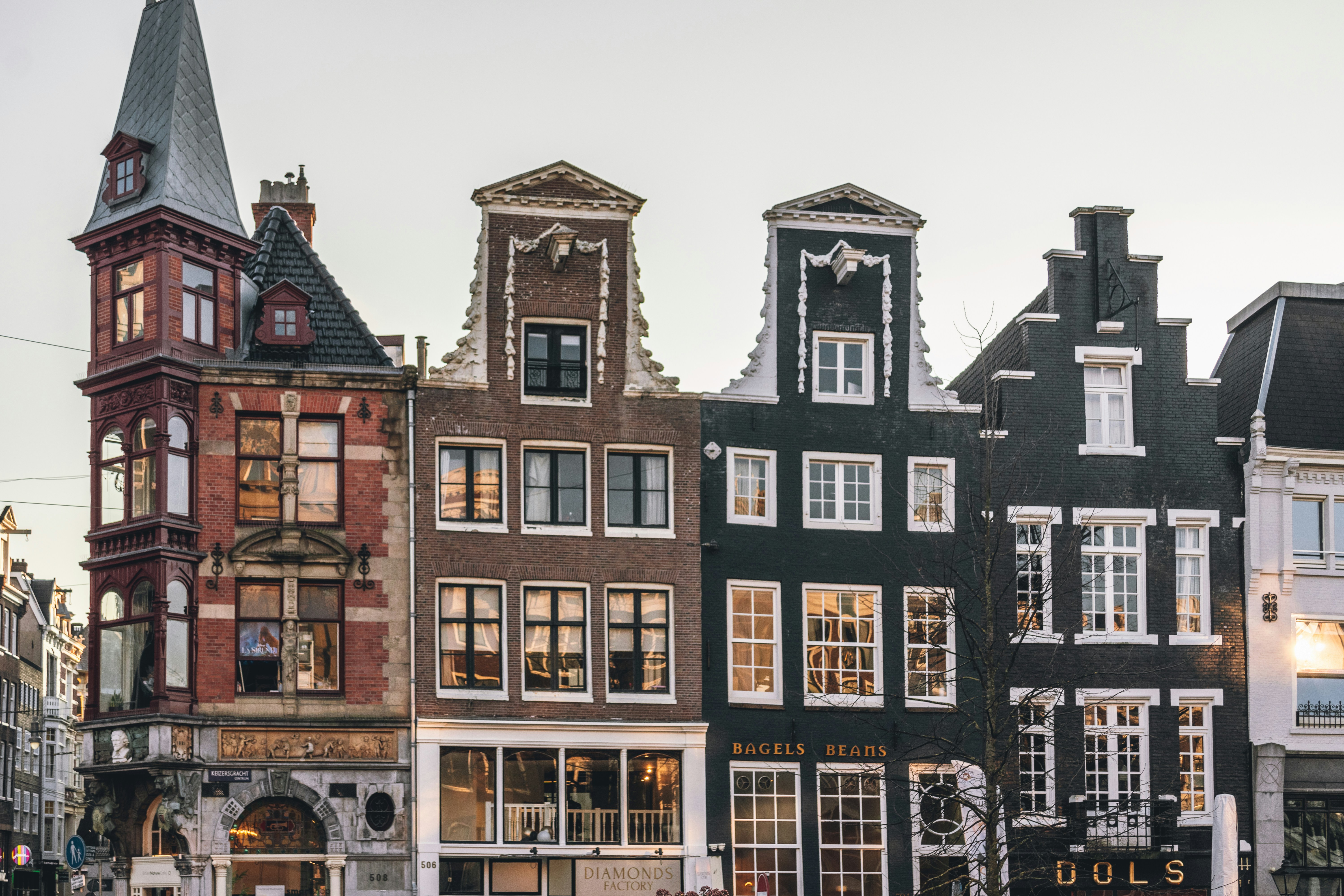
The Netherlands has a lot going for it: one of the strongest economies in Europe, a tech scene that punches well above its weight, and a population where roughly 95% speak English. For skilled professionals considering Europe, it's consistently one of the top landing spots.
But it's not all canals and cycling. The housing market is brutal, the weather takes some adjusting, and the bureaucracy can be surprisingly dense for such a modern country. Here's what you actually need to know before making the move.
Key Facts at a Glance
| Detail | Info |
|---|---|
| Population | ~17.5 million |
| Language | Dutch (English widely spoken in workplaces) |
| Currency | Euro (EUR) |
| Main cities | Amsterdam, Rotterdam, The Hague, Eindhoven, Utrecht |
| Work visa | Highly Skilled Migrant (Kennismigrant), EU Blue Card |
| 30% ruling | Up to 30% of salary tax-free for 5 years |
| Average IT salary | EUR 55,000–95,000/year |
| Avg. working week | 32 hours (shortest in the EU) |
| Vacation days | 20 minimum (most employers offer 25–32) |
| Healthcare | Mandatory insurance, ~EUR 159/month |
Your Visa Options
Non-EU citizens need a residence permit to work in the Netherlands. There are a few routes, but for skilled professionals, two stand out.
Highly Skilled Migrant Visa (Kennismigrant)
This is the most common route for professionals. Your employer must be a recognised sponsor with the IND (Dutch immigration service), and you need to meet a salary threshold:
- Age 30+: EUR 5,942/month gross
- Under 30: EUR 4,357/month gross
- Recent Dutch graduates (within 3 years): EUR 3,122/month gross
Processing is fast — typically 2 to 4 weeks once your employer submits the application. The permit is tied to your employer, so if you switch jobs, your new employer needs to file a new application.
EU Blue Card
Similar to the Highly Skilled Migrant visa but with EU-wide portability. You need a university degree and a job offer paying at least EUR 5,942/month. After 12 months, you can move to another EU country.
Orientation Year Visa (Zoekjaar)
If you graduated from a Dutch university or a top-200 global university (per Times Higher Education or QS rankings), you can apply for a 12-month orientation year. During this time, you can work without restrictions while you look for a permanent role. You have up to 3 years after graduation to apply, and the fee is EUR 254.
The best part: if you transition to a Highly Skilled Migrant permit within 3 years of graduating, you only need to meet the reduced salary threshold of EUR 3,122/month.
Salary thresholds are updated twice a year (January and July). Always check the latest figures on ind.nl before applying.
The 30% Ruling: A Major Tax Advantage
This is one of the biggest draws for expats in the Netherlands. If you're recruited from abroad and have specific expertise that's scarce in the Dutch market, your employer can apply for the 30% ruling — which makes up to 30% of your gross salary tax-free.
Here's how it works in practice: on a EUR 70,000 salary, only EUR 49,000 is taxable. The other EUR 21,000 is treated as a tax-free allowance for "extraterritorial costs." Over five years, that adds up to serious money.
The key requirements:
- You must have been recruited from abroad (lived more than 150 km from the Dutch border for at least 16 of the 24 months before starting)
- You must have specific expertise not readily available in the Netherlands
- Your taxable salary must be at least EUR 46,107/year (lower for under-30s and researchers)
- The allowance is capped at approximately EUR 233,000 of salary
The ruling currently lasts for 5 years and remains at the full 30% rate through 2026. There's political discussion about reducing it to 27% from 2027, but nothing is finalised yet.
One important change: the partial non-resident tax status (which exempted expats from Box 2 and Box 3 taxes on savings and investments) was abolished for new applicants from January 1, 2025. If you already had the ruling before 2024, transitional rules apply until end of 2026.
Salaries: What Professionals Earn
Dutch salaries for tech and finance professionals are competitive, especially when combined with the 30% ruling:
- Software engineer: EUR 55,000–95,000/year (Amsterdam skews higher, EUR 65,000–105,000)
- Finance professional: EUR 55,000–75,000 (senior roles above EUR 90,000)
- Engineering: EUR 50,000–70,000
- National median salary: ~EUR 48,000/year
These figures look modest compared to US salaries, but factor in the 30% ruling, 25+ vacation days, mandatory pension contributions by your employer, and affordable healthcare — the total compensation package tells a different story.
Cost of Living
The Netherlands isn't cheap, but outside Amsterdam it's manageable. Here's what to budget:
Rent (1-bedroom apartment)
| City | City centre | Outside centre |
|---|---|---|
| Amsterdam | EUR 2,200 | EUR 1,650 |
| Rotterdam | EUR 1,550 | EUR 1,280 |
| The Hague | EUR 1,520 | EUR 1,320 |
| Eindhoven | EUR 1,440 | EUR 1,180 |
Other Monthly Costs
- Groceries (single person): EUR 250–350
- Utilities (electricity, gas, water): EUR 200–260
- Internet: EUR 40–70
- Public transport pass: EUR 95–110
- Dining out (2 people, mid-range): EUR 70–85
- Coffee (cappuccino): EUR 3.50–4.00
Monthly Budget Summary
- Single person (Amsterdam): EUR 2,800–3,500 (including rent)
- Single person (Rotterdam/Eindhoven): EUR 2,000–2,700 (including rent)
- Couple (Amsterdam): EUR 3,800–4,500 (including rent)
Amsterdam rent alone eats a big chunk of your budget. If you're open to Rotterdam, Utrecht, or Eindhoven, your money goes significantly further — Amsterdam rents are about 50% higher than Eindhoven's.
The Housing Situation (Be Prepared)
This is the single biggest challenge for expats in the Netherlands right now. The rental market is in crisis. Average rents hit EUR 1,838/month nationwide in late 2025, up 6.5% year-over-year, and the trend is continuing.
What's driving it: the Affordable Rent Act (Wet betaalbare huur) is pushing private landlords to sell their properties rather than rent them out. More rental homes are leaving the market than entering it. In Amsterdam, social housing has a wait list of over 10 years.
As an expat, you'll almost certainly be renting in the private (free) sector, which is the most expensive and shrinking segment. Here's what to expect:
- You'll need proof of income (typically 3x the monthly rent in gross salary)
- Expect to pay 1–2 months deposit upfront
- You'll need your BSN (citizen service number) — register with your municipality as soon as you arrive
- Competition is fierce, especially in Amsterdam and the Randstad region
Useful platforms: Funda (largest Dutch property site), Pararius (expat-focused), and Kamernet (for rooms and shared housing).
Start your housing search before you arrive. Many expats use temporary housing or serviced apartments for the first month while they search. Don't sign anything without seeing the place in person — scams targeting expats are common.
Healthcare
Health insurance is mandatory in the Netherlands. You must be insured within 4 months of receiving your residence permit — no exceptions.
The system works like this: you choose a private insurer for your basic package (basisverzekering), which covers GP visits, hospital care, prescriptions, mental health, and maternity care. The average monthly premium is about EUR 159 in 2026.
There's also a mandatory deductible (eigen risico) of EUR 385 per year. That means you pay the first EUR 385 of specialist care and prescriptions out of pocket. GP visits and maternity care are exempt from the deductible.
Your employer also contributes to your healthcare through payroll — roughly half the total cost is covered this way, though you won't see it on your pay slip.
A few things worth knowing:
- Children under 18 are insured for free under a parent's policy
- You can switch insurers once a year (during December/January)
- Many insurers offer English-language customer service
- You can add supplementary insurance for things like dental, physiotherapy, and alternative medicine — but it's optional
Compared to the US, the system is refreshingly simple. No in-network/out-of-network headaches, no coverage denials, no surprise bills.
Taxes
The Dutch tax system uses three "boxes" for different types of income:
Box 1: Income from Work
| Taxable Income | Rate |
|---|---|
| Up to EUR 38,883 | 35.75% |
| EUR 38,883–78,426 | 37.56% |
| Above EUR 78,426 | 49.50% |
That first bracket looks high, but it includes social security contributions (pension, long-term care, etc.). The actual income tax portion of the first bracket is only about 8% — the rest is social security that funds your pension and healthcare.
Box 2: Income from Substantial Interest
If you own 5%+ of a company: ~24.5% on the first ~EUR 67,000 of dividends, 33% above that.
Box 3: Savings and Investments
A flat 36% tax on deemed returns from your savings and investments. This is calculated on a fictional return, not your actual gains — which can work for or against you.
With the 30% ruling, the effective tax burden drops considerably. Most expats in professional roles end up with an effective rate between 30–38% on their total compensation.
Work Culture
The Dutch work differently. The average working week is just 32 hours — the shortest in the EU. About 75% of Dutch workers work part-time, and it's not seen as a lack of ambition. It's just how things work here.
What to expect:
- Direct communication: The Dutch are famously blunt. They say what they mean, and they expect you to do the same. It's not rudeness — it's efficiency. Coming from the US, where things are often wrapped in pleasantries, the directness can be a shock at first.
- Flat hierarchies: Titles matter less than ideas. Junior employees are expected to speak up in meetings, and managers don't sit in corner offices making pronouncements.
- Punctuality: Showing up late to a meeting is genuinely disrespectful. If you say 14:00, you mean 14:00.
- Vacation: The legal minimum is 20 days, but most companies offer 25 to 32 days plus about 8 public holidays. Many Dutch workers take 3–4 weeks off in summer, and nobody bats an eye.
Around 90% of the Dutch population speaks English, and most international companies and tech firms operate entirely in English. That said, learning Dutch will open doors — socially and professionally. For long-term residence, you'll eventually need to pass a civic integration exam that includes Dutch language skills.
The Tech and Startup Scene
The Netherlands punches far above its weight in tech. Amsterdam is ranked among the top 5 tech ecosystems in Europe, and the country is home to some globally significant companies:
- ASML (Eindhoven) — builds the machines that make advanced semiconductors possible. Literally the only company in the world that makes EUV lithography systems.
- Booking.com (Amsterdam) — still headquartered here, and still one of the largest tech employers in the country
- Adyen (Amsterdam) — payment processing, valued at over EUR 45 billion
- Philips (Eindhoven/Amsterdam) — health tech and connected devices
- TomTom (Amsterdam) — mapping and location technology
The scale-up scene is thriving too: Mollie (payments), Picnic (online grocery), Backbase (fintech), and Bird (cloud communications) are all growing fast.
Beyond Amsterdam, Eindhoven's "Brainport" region is a hardware and deep-tech hub — home to ASML, NXP, and dozens of high-tech startups. The Hague has a growing govtech and sustainability cluster, and Rotterdam is building a reputation for logistics and maritime tech.
Getting Around
Public transport in the Netherlands is excellent. The train network connects every major city, trams and metros cover urban areas, and then there are the bikes — roughly 23 million of them for 17.5 million people.
For trains, you'll use an OV-chipkaart (EUR 7.50 for a personal card) or the newer OV-pas system that's gradually replacing it. Most people use NS Flex, a subscription that bills monthly via direct debit.
A monthly urban transport pass runs EUR 95–110 depending on the city. For the whole country, the KlimaTicket equivalent doesn't exist yet, but there are various multi-trip and off-peak discounts.
One heads-up: train prices went up 6.5% in January 2026, and the old Weekend Voordeel and Altijd Voordeel discount subscriptions were discontinued in February 2026. Check ns.nl for current options.
Most expats eventually buy a bike. It's not a lifestyle choice — it's just the fastest way to get around in Dutch cities. OV-fiets (rental bikes at train stations) cost EUR 4.80/day if you need one occasionally.
Frequently Asked Questions
Do I need to speak Dutch to work in the Netherlands? For tech, finance, and international companies — no. English is the working language at most multinationals and startups. But for daily life (doctor's offices, government letters, neighbours), some Dutch helps enormously. Highly skilled migrants are exempt from civic integration requirements during their permit, but you'll need Dutch for permanent residency.
How long does the Kennismigrant visa take? Usually 2 to 4 weeks once your recognised sponsor employer submits the application. The employer handles most of the paperwork — your main job is providing documents and showing up for your appointment.
Is the 30% ruling guaranteed if I qualify? Not automatically. Your employer must apply for it, and the Dutch tax authorities (Belastingdienst) review each case. If you meet the criteria, approval is straightforward. The ruling is currently at 30% through 2026, with a possible reduction to 27% from 2027.
Can I bring my family? Yes. The Highly Skilled Migrant visa allows family reunification. Your spouse gets a residence permit with open work access — they can work for any employer without restrictions. Children get access to Dutch education and healthcare.
What's the biggest challenge for expats? Housing, by far. The rental market is extremely competitive, especially in Amsterdam and the Randstad. Start searching early, be ready to act fast, and consider cities outside Amsterdam where rents are 30–50% lower.
How do I get permanent residency? After 5 years of continuous legal residence, you can apply for permanent residency (or Dutch citizenship). You'll need to pass the civic integration exam, which includes Dutch language at A2 or B1 level, and demonstrate stable income.
The Netherlands offers something unusual: a genuinely international work environment where English gets you through 90% of daily life, combined with European labour protections, excellent infrastructure, and a quality of life that's hard to match. The housing market is the one serious hurdle, but for professionals who plan ahead, it's very much worth it.
At Move2Europe, we help skilled professionals navigate this exact process — from figuring out the right visa route to landing a role and getting settled.
Book a free consultation and let's map out your path to the Netherlands.
Official sources:
- ind.nl — Dutch Immigration and Naturalisation Service (visa types, salary thresholds, fees)
- government.nl — Dutch government portal (tax, housing, labour law)
- belastingdienst.nl — Dutch Tax and Customs Administration (30% ruling, tax brackets)
- rijksoverheid.nl — National government (housing policy, civic integration)
- Numbeo — Cost of living comparison data
- ns.nl — Dutch Railways (transport fares, subscriptions)