Portugal has spent a decade being the most recommended country in Europe, and it has been extremely good about it. You will be met with more patience and more genuine warmth here than in most places you could move.
You should also know that housing in Lisbon now costs foreign buyers about 25% more per square metre than it costs the Portuguese, and that national house prices rose 17.5% in a single year. Portugal is welcoming you personally while being squeezed by people who look exactly like you, statistically speaking.
Both of those things are true at once. Almost every guide tells you the first half. Here's the whole picture, because the people who arrive knowing it tend to land better.
Key Facts at a Glance
| Thing | What to know |
|---|---|
| Language | Portuguese, and the "everyone speaks English" line is overstated |
| Adults with no foreign language | 30.1%, slightly worse than the EU average of 25.3% |
| Santo António | Night of 12 to 13 June, Lisbon |
| São João | Night of 23 to 24 June, Porto |
| National house prices (Q4 2025) | €2,198/m² median, up 17.5% year on year |
| Lisbon, domestic buyers (2025) | €4,813/m² |
| Lisbon, foreign tax residents (2025) | €6,026/m² |
| Tax | NHR closed to new arrivals in 2024, replaced by IFICI |
| The thing that helps most | Trying in Portuguese, badly, immediately |
The Two Best Nights of the Year
Forget the music festivals for a moment. The Santos Populares in June are the real thing, and they're free, and they're the fastest way to understand the country.
Santo António, Lisbon, 12 to 13 June
Lisbon's patron saint gets the longest night of the year. More than two thousand marchers come down the Avenida da Liberdade in the Marchas Populares, each neighbourhood competing with its own costumes and choreography, and the whole thing is organised by the city with the neighbourhood associations rather than staged for visitors.
The same night, the city holds the Casamentos de Santo António, a mass wedding ceremony for couples from across Lisbon. Alfama and the old neighbourhoods fill with grills, sardines, and people who have known each other their whole lives.
You do not need a ticket, an invitation, or good Portuguese. You need to turn up and eat a sardine.
São João, Porto, 23 to 24 June
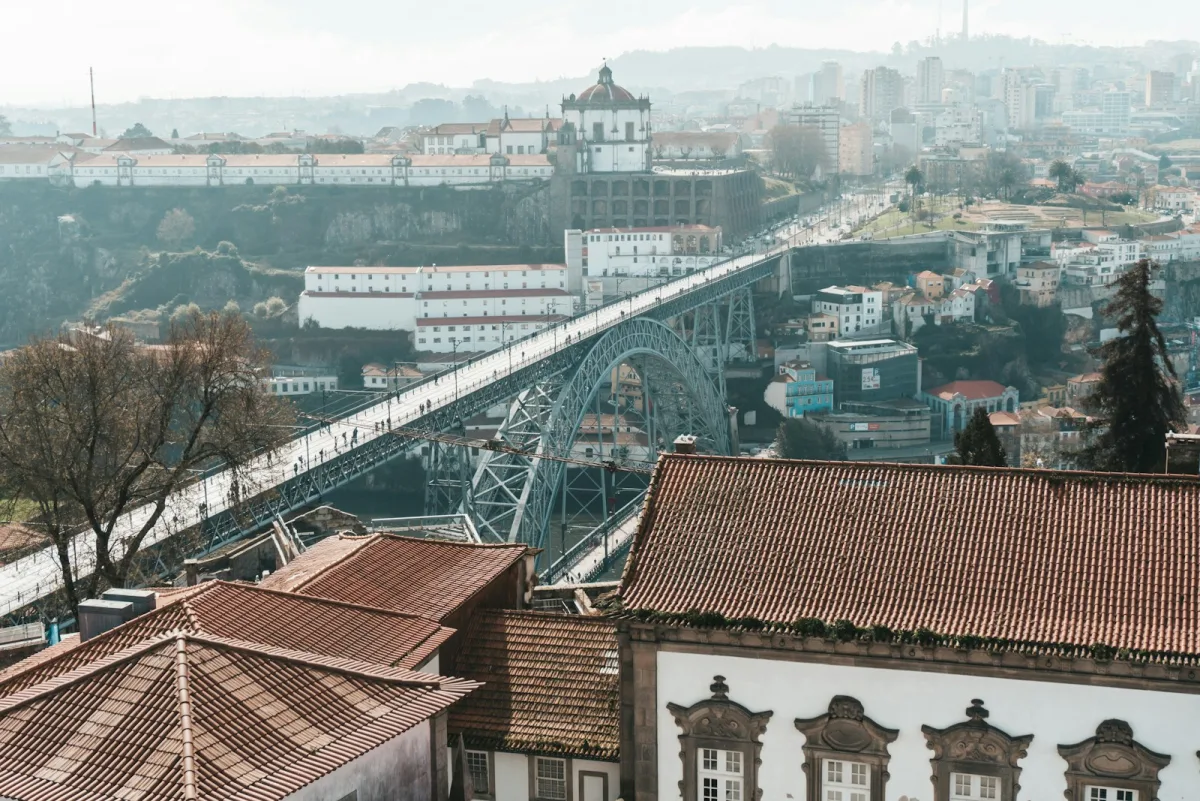
Porto's version is stranger and, most people would say, better. The night of 23 June is the city's biggest, with stages across the centre and close to twenty minutes of fireworks fired from the Ponte Luís I and platforms on the Douro, over 150,000 shots of it. The following evening the Banda Sinfónica Portuguesa plays a free concert in the gardens of the Palácio de Cristal.
Then there's the part nobody warns you about: everyone carries a soft plastic hammer and gently bops strangers on the head with it. There's no explaining it. It is also the single easiest icebreaker in Europe, because you cannot be a stranger to someone who has just hit you with a squeaky hammer.
Beyond June, Santa Maria da Feira's medieval festival in August turns a whole town into the 1300s, and it's the one to take kids to.
The English Thing Is Overstated
You'll read everywhere that Portugal has excellent English. In Lisbon and Porto, in tech offices and anywhere touching tourism, that's true, and it's why the country is so easy to arrive in.
Nationally, it's a different picture. Eurostat data shows 30.1% of working-age Portuguese adults speak no foreign language at all, which is slightly worse than the EU average of 25.3%. Portugal is far better placed than Spain, where the figure is 43.7%. It is nowhere near the Netherlands at 7%.
What that means practically is that the English bubble is real but thin. It covers your job, your co-working space, and your favourite brunch place. It does not cover the finanças office, your landlord's mother, the plumber, or the far side of forty.
The good news is what we consistently see with clients: the attempt lands. The ones who arrive with fifty words and use them badly get a warmer reception than the ones who wait until their Portuguese is good enough not to be embarrassing. It isn't about competence. It's about signalling that you consider this your country now rather than a nice place you're staying.
The Part That Isn't in the Brochure
Here's the number that explains the mood.
In the last quarter of 2025, the median price of housing sold in Portugal hit €2,198 per square metre, a rise of 17.5% on the year before. Across 2025 as a whole, the median in Lisbon was €4,813 per square metre for Portuguese buyers. For buyers with foreign tax residence, it was €6,026.
Foreigners are paying about a quarter more per square metre in Lisbon, and in doing so they're setting the price that locals then have to meet. Portuguese salaries have not risen 17.5% a year. You can do the rest of the arithmetic yourself.
This is the context for anything you read about Portuguese attitudes to foreigners hardening. It isn't really about you personally, and Portugal remains genuinely welcoming in a way that shows up the moment you meet an actual person. But there is a real, measurable squeeze, and pretending it doesn't exist is how newcomers end up baffled by an undercurrent they can't see.
What to do about it is mostly a matter of not being oblivious. Learn the language. Don't treat the country as a tax structure with beaches. Don't outbid a local family on a flat and then complain the neighbourhood has no character. And if you're weighing the financial side of a move, our digital nomad visa guide covers Portugal's D8 route and what replaced the old NHR regime, since that's the part people usually get wrong.
Where You Land Changes the Move
Lisbon is the obvious choice and the most expensive, most saturated one. Porto is cheaper, colder, prouder, and many people's answer once they've seen both. The Algarve is quieter and more foreign, which is either the point or the problem depending on what you want. Coimbra and Braga are where you go if you actually want to live in Portugal rather than near it.
The further you get from Lisbon, the more Portuguese you need and the more Portugal you get. That trade is the whole decision.
Saudade, and the Rhythm
Portuguese has a word, saudade, that gets described as untranslatable and then translated badly in every guide. It's roughly a longing for something absent, and the reason it matters is that it tells you something true about the temperament here. There's a melancholy running underneath the warmth. Fado is not performed sadness, it's the actual register of the place.
That catches out clients who arrive expecting Portugal to be Spain with better beaches. It isn't. The register we hear described most often is quieter and more reserved on first contact, slower to open and steadier once open. The social rhythm runs late, meals take much longer than you think they should, and leaving a lunch after ninety minutes reads as rude.
For the practical first month, our guide to your first 30 days in Europe walks registration, banking, and healthcare in order. And if you're still choosing a country, our guides to Spanish culture and Dutch culture cover the other two ends of the spectrum.
Frequently Asked Questions
Does everyone in Portugal speak English? No. Eurostat data shows 30.1% of working-age Portuguese adults speak no foreign language at all, slightly worse than the EU average of 25.3%. English is common in Lisbon, Porto, tech, and tourism, but it thins out fast outside that bubble.
When are the Santos Populares? Santo António runs the night of 12 to 13 June in Lisbon, with the Marchas Populares parading down the Avenida da Liberdade. São João is the night of 23 to 24 June in Porto, with fireworks over the Douro. Both are free and open to anyone.
Is Portugal still a tax haven for expats? Not in the way it was. The Non-Habitual Resident regime closed to new applicants in 2024 and was replaced by IFICI, which is narrower and targets specific professions and researchers. Plenty of people don't qualify.
Are the Portuguese hostile to foreigners? Not personally, and that's rarely what people actually encounter. But there's a real housing squeeze behind the mood: foreign tax residents pay a median €6,026 per square metre in Lisbon against €4,813 for domestic buyers, while national prices rose 17.5% in a year.
Should I move to Lisbon or Porto? Porto is cheaper and less saturated with newcomers; Lisbon has more jobs and more English. As a rule, the further from Lisbon you go, the more Portuguese you'll need and the more of the actual country you'll get.
What's the fastest way to make Portuguese friends? Turn up to the neighbourhood festa and speak bad Portuguese. In our experience with clients, the attempt matters more than the fluency, and June's Santos Populares are the single easiest entry point in the calendar.
Portugal is the warmest country of the three we've written about, and the one where arriving thoughtlessly does the most damage. Learn some Portuguese, go to the festa in June, and treat the housing situation as something you're part of rather than something happening to other people.
Official sources:
- Eurostat, foreign language skills by country, 2022
- Instituto Nacional de Estatística, Portuguese house price statistics by buyer residence
- Câmara Municipal de Lisboa, Festas de Lisboa and the Marchas Populares
- Câmara Municipal do Porto, official São João programme