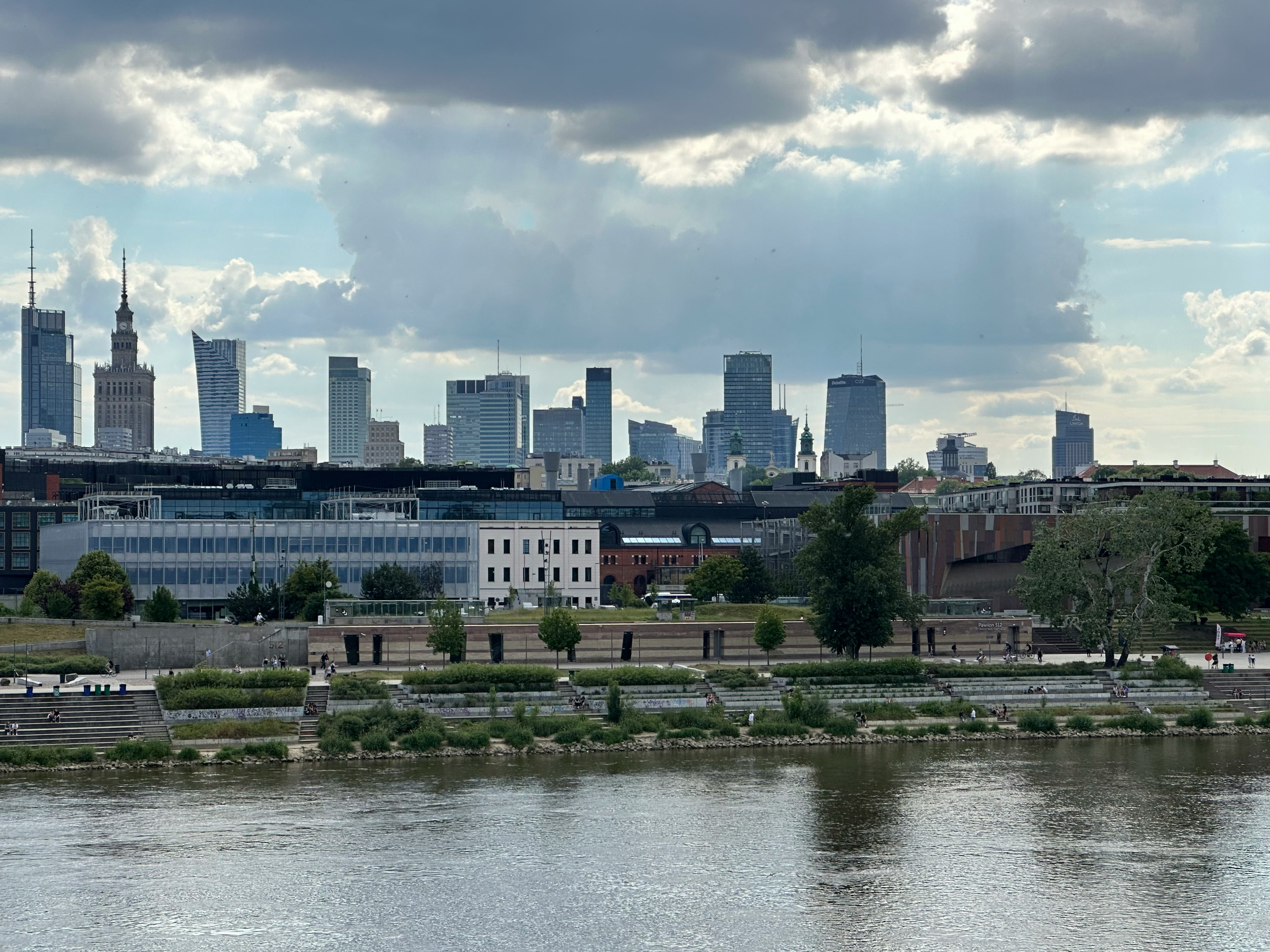
Poland doesn't get the same attention as Germany or the Netherlands on most "move to Europe" lists, but it probably should. The country hit $1 trillion in GDP in 2025, has one of the fastest-growing economies in the EU, and its tech sector is booming. Warsaw and Krakow are full of international companies, salaries in IT are surprisingly competitive, and your money goes much further than in Western Europe.
If you're considering a move to Europe and want a high quality of life without the price tag of Amsterdam or Berlin, Poland is worth a serious look.
Key Facts at a Glance
| Detail | Info |
|---|---|
| Population | ~37.6 million |
| Language | Polish (English common in tech/corporate) |
| Currency | Polish Zloty (PLN), ~4 PLN = 1 USD |
| EU member since | 2004 (Schengen since 2007) |
| GDP growth (2026) | ~3.5% (among the fastest in the EU) |
| Work visa | Work permit + Type D visa, EU Blue Card |
| Average IT salary | PLN 14,000–25,000/month gross |
| Minimum wage (2026) | PLN 4,806/month gross |
| Vacation days | 20–26 days + 14 public holidays |
| Monthly transport pass | PLN 110–170 |
The Economy
Poland is the 8th largest economy in the EU and one of the few that kept growing through the pandemic without a single year of negative GDP before 2020. Growth hit 3.6% in 2025 and is projected at 3.5% for 2026.
What's driving it: strong private consumption, rising real wages, and massive EU structural fund absorption. Poland receives more EU cohesion funding than any other member state, and that money is visibly transforming infrastructure — new motorways, modernised rail, upgraded city centres.
The currency is the Polish zloty (PLN). Poland hasn't adopted the euro and there's no confirmed timeline for doing so. For expats earning in PLN, this is mostly neutral — wages and costs are both in zloty. If you're paid in euros or dollars, the exchange rate works heavily in your favour.
Key Cities
Warsaw
The capital and biggest business hub. Home to major multinational offices, a growing startup scene, and the Warsaw Stock Exchange. Population about 1.86 million. Most expensive city in Poland, but still significantly cheaper than Western European capitals.
Krakow
A cultural powerhouse with a massive IT and outsourcing sector. Over 100,000 IT specialists work here — the highest concentration in Poland. International shared service centres for companies like Google, IBM, and Capgemini are major employers. About 800,000 residents.
Wroclaw
Fast-growing tech and business hub in western Poland with a genuinely international atmosphere. Strong ties to Germany, and increasingly popular with expats. Around 670,000 residents.
Gdansk (Tricity)
A Baltic coast city with growing tech, shipping, and tourism sectors. The Tricity metro area (Gdansk, Gdynia, Sopot) has about 760,000 residents and a quality of life that's hard to beat — beach access included.
Poznan and Lodz
Poznan is an important trade centre with strong German business ties. Lodz is emerging as a business process outsourcing hub with costs significantly lower than Warsaw.
Visa and Work Permits
EU/EEA citizens can live and work freely — just register with your local municipality if staying longer than 3 months.
For non-EU citizens, here are the main routes:
Work Permit + Type D Visa
The most common path. Your employer applies for a work permit (Type A), which typically requires a labour market test to confirm no qualified Polish or EU candidate is available. Roles on the National Deficit List skip this test, which saves 4–6 weeks.
Once the work permit is approved, you apply for a Type D national visa at the Polish consulate in your home country. The visa is valid for up to 1 year.
Temporary Residence and Work Permit (Karta Pobytu)
This combines your residence and work authorisation in one card. Valid for 1–3 years. Here's the catch: processing times vary wildly depending on your voivodeship (region). Krakow might take around 5 months, while Wroclaw can take over a year.
The good news: once you submit your application, you get a stamp in your passport (the "stampka") that legally allows you to stay and work in Poland until the decision is made. So you're not stuck waiting without being able to work.
EU Blue Card
For highly qualified workers with a university degree and a salary of at least PLN 13,355 per month gross (2026 threshold — that's 150% of the national average). Valid for up to 3 years, and as of 2025, Blue Card holders can also engage in business activities.
Always check the latest visa requirements on gov.pl. Processing times and rules change frequently, and they vary by region.
What You'll Need When You Arrive
Two numbers are essential:
- PESEL: Your national identification number. Required for healthcare, banking, taxes, and basically everything. Get it at your local city office (urzad gminy) when you register your address.
- BSN equivalent / NIP: Your tax identification number, needed for employment contracts and tax filings.
Register your address at the local municipality as soon as you have a place to live. Everything else — bank account, health insurance, phone contract — depends on this.
Salaries
Poland's salaries look lower than Western Europe on paper, but when you factor in the cost of living, the purchasing power is surprisingly competitive. Here's what professionals earn (gross monthly):
- Entry-level / general positions: PLN 5,500–8,000
- Mid-level professionals: PLN 8,000–12,000
- Senior specialists / IT: PLN 14,000–25,000+
- AI / ML specialists (B2B): Can reach PLN 30,000+ net
Average net salaries by city: Warsaw PLN 8,295, Krakow PLN 7,214, Gdansk PLN 6,885, Wroclaw PLN 6,762.
One thing to know: Poland has a strong B2B (self-employment) culture, especially in IT. Many "employees" actually work as independent contractors through a JDG (sole proprietorship). This affects your tax treatment, benefits, and vacation entitlements. If a company offers you a B2B contract instead of an employment contract (umowa o prace), make sure you understand the trade-offs — more take-home pay, but you handle your own insurance and get no paid leave.
Cost of Living
This is where Poland really shines. Your money goes much further than in Western Europe.
Rent (1-bedroom apartment)
| City | City centre | Outside centre |
|---|---|---|
| Warsaw | PLN 4,400 (~EUR 1,020) | PLN 3,400 (~EUR 790) |
| Krakow | PLN 3,500 (~EUR 810) | PLN 2,900 (~EUR 670) |
| Wroclaw | PLN 3,400 (~EUR 790) | PLN 2,750 (~EUR 640) |
| Gdansk | PLN 3,570 (~EUR 830) | PLN 2,800 (~EUR 650) |
Other Monthly Costs
- Groceries (single person): PLN 1,200–1,800 (~EUR 280–420)
- Utilities (electricity, heating, water, internet): PLN 500–900 (~EUR 115–210)
- Public transport pass: PLN 110–170 (~EUR 25–40)
- Dining out (2 people, mid-range): PLN 180–205 (~EUR 42–48)
- Coffee (cappuccino): PLN 15–18 (~EUR 3.50–4.20)
Monthly Budget Summary
- Single person (Warsaw): PLN 6,500–8,500 including rent (~EUR 1,500–2,000)
- Single person (Krakow/Wroclaw): PLN 5,500–7,000 including rent (~EUR 1,280–1,630)
For Americans used to US city prices, these numbers are eye-opening. A comfortable life in Krakow costs roughly what you'd pay for rent alone in San Francisco.
Healthcare
Poland has a public healthcare system (NFZ) funded by mandatory contributions — 9% of your gross salary, deducted automatically from your paycheck.
As an employed expat, you're automatically enrolled. Your NFZ coverage includes GP visits, specialists, emergency care, hospital stays, and subsidised prescriptions. The downside: waiting times for specialists can be long in the public system.
That's why most professionals in Poland use private healthcare, either through employer-provided plans or individual subscriptions. Major private providers like LuxMed, Medicover, and Enel-Med offer comprehensive packages starting around PLN 100–200/month. Many IT and corporate jobs include private healthcare as a standard benefit.
If you're on a B2B contract, you'll need to arrange your own health insurance. You can voluntarily join NFZ (about PLN 786/month) or go fully private.
Taxes
Poland's tax system has two main options for employees:
Progressive Tax (Default)
| Taxable Income | Rate |
|---|---|
| Up to PLN 120,000/year | 12% |
| Above PLN 120,000/year | 32% on the excess |
There's a tax-free allowance of PLN 30,000 per year — you pay no income tax on that first chunk. On top of income tax, employees pay social security contributions (ZUS) of about 13.7% of gross salary, plus the 9% health insurance contribution.
For B2B Contractors
Self-employed professionals can choose a flat 19% tax rate, or even lower rates for specific activities (IT services qualify for 12% under the lump-sum system). This is one reason B2B contracts are so popular in tech — the tax savings can be significant.
Other things to know:
- Capital gains are taxed at a flat 19%
- There's a solidarity surcharge of 4% on income above PLN 1 million/year
- The ZUS contribution cap for 2026 is PLN 282,600 of annual income
Work Culture
Polish work culture borrows from both Western and Central European traditions. Here's what to expect:
Time Off
- Annual leave: 20 days if you have less than 10 years of experience, 26 days if you have 10 or more
- Public holidays: 14 per year (Christmas Eve was added as a statutory holiday from February 2025)
- Total paid time off: Up to 40 days per year
Here's a quirk that works in your favour: education years count toward the 10-year threshold. A master's degree gives you 8 years of credit. So if you have a master's and 2 years of work experience, you already qualify for 26 vacation days.
Working Hours
Standard 40-hour week, 8 hours per day. Overtime must be compensated — either paid at 150% (weekdays) or 200% (Sundays/holidays), or given as time off in lieu.
Communication Style
Poles tend to be more formal than the Dutch or Scandinavians, but less hierarchical than you might expect. In international companies and startups, the culture is relaxed and direct. Titles matter less than competence. Punctuality is valued.
The Tech Scene
Poland has the largest tech talent pool in Central and Eastern Europe — over 650,000 professionals. VC investment hit PLN 3.4 billion in 2025, and early 2026 saw a 103% increase in funding compared to the same period the year before.
Notable companies with Polish roots:
- CD Projekt — the studio behind The Witcher and Cyberpunk 2077
- ElevenLabs — AI voice technology, over $200M in funding
- Docplanner — online healthcare platform, $240M+ raised
- Booksy — booking platform, $200M+ raised
- Asseco Poland — IT company operating in 60 countries with 33,000 employees
Warsaw is the main startup hub (#91 globally), but Krakow has the highest concentration of IT specialists in the country. Wroclaw is growing fast too, especially in software development and R&D.
The outsourcing sector is massive. International companies set up shared service centres and development teams in Poland because the talent is strong, English proficiency is high, and costs are 40–60% lower than in Western Europe.
Getting Around
Public transport in major Polish cities is solid — buses, trams, and Warsaw has a metro (2 lines). Monthly passes are cheap: PLN 110 in Wroclaw, PLN 150 in Krakow, PLN 170 in Warsaw.
Intercity rail (PKP Intercity) connects the major cities. Warsaw to Krakow takes about 2.5 hours by express train.
Poland is also well-connected by air — Warsaw Chopin Airport has direct flights to most European capitals, and budget carriers like Ryanair and Wizz Air operate from airports across the country.
The cycling infrastructure is improving, particularly in Warsaw, Wroclaw, and Gdansk, though it's not at Dutch or Danish levels yet.
Language
Poland ranks #15 globally for English proficiency (EF English Proficiency Index) — in the "Very High" category. About 90% of young professionals (under 35) speak functional English.
In IT, finance, and international companies, English is the working language. You can absolutely get by professionally without Polish.
Daily life is a different story. Government offices, healthcare appointments, landlords, and utility companies mostly operate in Polish. Having basic Polish (or a Polish-speaking friend) makes a significant difference. The younger generation speaks English well, but outside major cities the language barrier is real.
For permanent residency (after 5 years), you'll need to demonstrate knowledge of Polish.
Housing
Finding a place to live is easier than in Amsterdam or Berlin, but the market has tightened, especially in Warsaw. Rents rose significantly in 2024–2025 due to increased demand from both domestic migration and the large Ukrainian community.
What to expect:
- Landlords typically require 1–2 months deposit
- You'll need proof of income or an employment contract
- Most leases are for 12 months with a notice period
- Furnished apartments are common in the expat market but cost more
Main platforms: Otodom (largest property site), OLX.pl, and Facebook groups (surprisingly effective for expat housing in Warsaw and Krakow).
If you're moving to Warsaw, be prepared for central rents above PLN 4,000 for a 1-bedroom. Consider neighbourhoods like Mokotow, Zoliborz, or Praga-Polnoc for better value with good transport links.
Frequently Asked Questions
Do I need to speak Polish to work in Poland? Not in IT, finance, or international companies — English is the standard working language. For daily life outside work, basic Polish helps a lot. Government offices and healthcare are mostly Polish-only. Younger Poles (under 35) generally speak good English.
How long does it take to get a work permit? The work permit itself takes 1–3 months. The residence card (Karta Pobytu) varies wildly by region — from about 5 months in Krakow to over a year in some voivodeships. You can legally work while waiting once your application is submitted.
Is Poland safe for expats? Yes. Poland is one of the safer countries in Europe, with low violent crime rates. Common-sense precautions apply in any city, but serious safety concerns are rare.
Can I bring my family? Yes. Family reunification is available for work permit holders. Your spouse can apply for their own residence permit, and children get access to the Polish education system.
What's the path to permanent residency? After 5 years of continuous legal residence, you can apply for permanent residency or EU long-term resident status. You'll need to demonstrate knowledge of Polish and stable income. Processing can take up to 12 months.
Should I take a B2B contract or employment contract? It depends on your priorities. Employment contracts (umowa o prace) give you paid vacation, sick leave, and employer-paid social security. B2B contracts offer higher net pay and lower taxes but no paid leave, and you handle your own insurance and retirement contributions. Most senior IT professionals in Poland work on B2B contracts.
Poland offers something rare in Europe right now: a fast-growing economy, a thriving tech sector, and a cost of living that lets you actually enjoy your salary. It's not the most obvious choice on the "move to Europe" list, but for professionals who look past the usual suspects, it's one of the smartest.
At Move2Europe, we help skilled professionals navigate the entire relocation process — from choosing the right visa route to finding your footing in a new city.
Book a free consultation and let's figure out your path to Poland.
Official sources:
- gov.pl — Polish government portal (visa types, residence permits)
- biznes.gov.pl — Polish business portal (starting a business, B2B registration)
- ind.nl/podatki.gov.pl — Polish tax administration (PIT brackets, tax-free allowance)
- paih.gov.pl — Polish Investment and Trade Agency (economy, investment climate)
- Numbeo — Cost of living comparison data
- EF EPI — English Proficiency Index