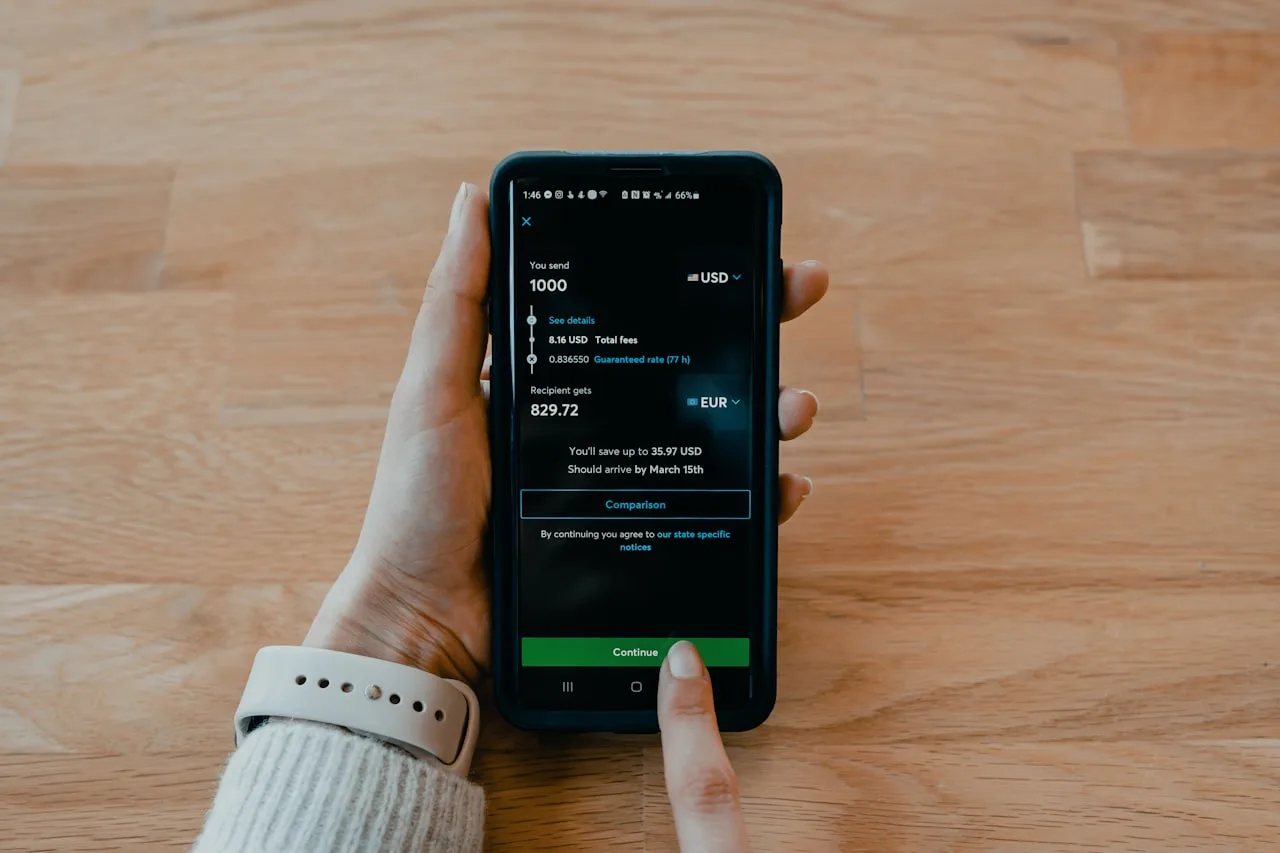
Moving to Germany without a job offer means the embassy needs to know you can support yourself financially. The standard way to prove that is a blocked account — a Sperrkonto.
Here's what it is, who needs one, and how to get it done without the back-and-forth.
Sperrkonto in Germany: Key Facts at a Glance
| Detail | 2026 Figure |
|---|---|
| Required amount (students) | €11,904/year (€992/month) |
| Required amount (Chancenkarte) | €13,092/year (€1,091/month) |
| Monthly payout | Fixed at your monthly rate |
| Fintiba setup fee | ~€89 |
| Fintiba monthly fee | ~€4.90 |
| Expatrio setup fee | ~€49 |
| Expatrio monthly fee | ~€5.00 |
| Processing time | 3–5 business days (after transfer clears) |
| Accepted by all German embassies | Yes (both Fintiba and Expatrio) |
What Is a Sperrkonto?
A Sperrkonto is a special escrow-style bank account required by German embassies as proof of financial means. You deposit the full required amount upfront before your visa appointment, and once you're in Germany, the account releases it to you in fixed monthly instalments. You can't access the full balance at once — that's what makes it "blocked," and that's exactly what makes it valid as financial proof.
The required amounts differ by visa type and are set by the Federal Foreign Office based on the BAföG living allowance:
- Students: €11,904 for 12 months (€992/month). This breaks down into €480 for basic needs, €382 for housing, €100 for health insurance, and €30 for long-term care insurance
- Opportunity Card (Chancenkarte) holders: €13,092 for 12 months (€1,091/month). The higher amount reflects the expectation that job seekers may have additional costs during their search
These figures are reviewed annually. Always confirm the current amount with your embassy before transferring funds.
Who Needs a Blocked Account?
You need a Sperrkonto if you're a non-EU citizen moving to Germany without a steady income already lined up there. That covers:
- International students enrolling at a German university
- Opportunity Card (Chancenkarte) applicants
- Au pairs and language course visa holders
- Job seeker visa holders without formal employment
If you hold a full scholarship that covers at least €992/month — a full DAAD scholarship, for example — you may be exempt. Partial scholarships that only cover part of the requirement don't get you out of opening the account; you'd need to deposit the difference.
Alternative Proof of Funds
The Sperrkonto isn't the only option in every case, though it's by far the most common:
- A formal Declaration of Commitment (Verpflichtungserklärung) from a sponsor living in Germany — they go to their local Ausländerbehörde and sign a legally binding guarantee to cover your living costs
- For the Chancenkarte specifically, a signed part-time employment contract demonstrating sufficient income can also qualify
- A bank guarantee letter from a German bank (rarely used in practice)
For most applicants coming from abroad, the Sperrkonto is the practical path. The alternatives require either a German-based sponsor or existing employment.
Fintiba vs. Expatrio: Which Provider Should You Choose?
Digital providers have replaced traditional banks for most applicants. As of 2026, the two main providers are Fintiba and Expatrio — both handle the entire process online and in English, and both are accepted by all German embassies.
Fintiba
- Setup fee: ~€89
- Monthly maintenance: ~€4.90
- Annual total cost: ~€148
- Extras: integrated health insurance options, tax ID assistance, faster processing available for an additional fee
- Known for: premium service, slightly faster confirmation letters
Expatrio
- Setup fee: ~€49
- Monthly maintenance: ~€5.00
- Annual total cost: ~€109
- Extras: health insurance bundles, student community features
- Known for: lower upfront cost, popular with students
The total cost difference over 12 months is about €39 — not a dealbreaker either way. Pick the one whose interface and support you prefer. Both have good reputations and reliable processing times.
Traditional banks like Deutsche Bank still offer blocked accounts, but the application process is slower, often requires a branch visit or embassy certification, and their digital experience doesn't compare. For most people, Fintiba or Expatrio is the straightforward choice.
How to Open a Sperrkonto — Step by Step
The entire process is remote:
- Create an account with your chosen provider (Fintiba or Expatrio) — you'll need your passport details and a valid email address
- Complete digital identity verification — typically a passport scan plus a video call or an automated ID verification app
- Transfer the required amount to your blocked account. This is where timing matters — international bank transfers can take 3–7 business days depending on your country and bank. SWIFT transfers are the standard method; some providers also accept TransferWise (Wise), which can be faster and cheaper for international transfers
- Once the funds arrive and are verified, you receive your confirmation letter (Sperrbescheinigung) — this is the document you include in your visa application
From start to confirmation letter, most applicants are done in 3–5 business days after the transfer clears.
Start early. Don't leave this until the week before your visa appointment. Embassy backlogs and international transfer delays are both real — especially around peak application seasons (May–August for students). Give yourself at least two to three weeks of buffer from when you initiate the transfer to when you need the confirmation letter.
Tips for the Transfer
- Make sure you transfer the exact amount required — not more, not less. Some providers reject transfers that don't match exactly
- Include the reference number your provider gives you. Without it, matching your transfer to your account can take days longer
- If transferring from a country with currency controls or restrictions on outward remittances, factor in additional processing time and any documentation your home bank may require
- Keep the transfer receipt — you may need it if there's a delay or dispute
What Happens After You Arrive in Germany?
Once you've registered your address (Anmeldung) and activated your account with your provider, you'll receive your monthly payout automatically. The fixed amount (€992 for students, €1,091 for Chancenkarte holders) lands in your regular German bank account each month.
You'll want to open a regular German bank account (Girokonto) as soon as possible after arrival — the blocked account payout needs somewhere to go. N26, Commerzbank, and Sparkasse are popular options for newcomers. Some providers like Fintiba and Expatrio also offer integrated regular banking alongside the Sperrkonto.
Closing or Converting the Account
Once your visa purpose has been fulfilled — you've found a job, completed your studies, or are leaving Germany — you can close the account. A few things to know:
- If you land a job and switch to a Blue Card or work permit, you can request early release of remaining funds. Contact your provider with proof of employment
- Conversion to a regular account is not automatic — it depends on your provider's policies, so check before you assume
- If your visa application was rejected, present the rejection letter to the provider and they'll release your full deposit
- If you're leaving Germany before your planned timeline, get written confirmation from your local Ausländerbehörde before closing the account — this avoids any issues with your residence status
Keep your Sperrbescheinigung (confirmation letter) and all account documentation until you've fully closed the account or converted your visa status. You may need these documents when dealing with the Ausländerbehörde.
Frequently Asked Questions
How much money do I need for a blocked account in Germany in 2026? Students need €11,904 (€992/month for 12 months). Chancenkarte holders need €13,092 (€1,091/month for 12 months). These amounts are set by the Federal Foreign Office and are reviewed annually based on the BAföG living allowance rate.
How long does it take to open a Sperrkonto? The account itself can be created in minutes online. The bottleneck is the bank transfer — international SWIFT transfers typically take 3–7 business days. Once the funds arrive and are verified, you receive your confirmation letter within 1–2 business days. Plan for about 1–3 weeks total from start to having your letter in hand.
Can I withdraw all the money at once? No — that defeats the purpose. The account releases a fixed monthly amount (€992 or €1,091 depending on your visa type). The only exceptions are visa rejection (full refund) or early termination with proof of employment or departure from Germany.
Is Fintiba or Expatrio better? Both are accepted by all German embassies and have reliable processing. Expatrio is cheaper upfront (€49 vs. €89 setup), while Fintiba has slightly lower monthly fees (€4.90 vs. €5.00). The total annual difference is about €39. Choose based on interface preference and any bundled services you might want (health insurance, tax ID assistance).
Do I need a blocked account if I already have a job offer? Generally no. If you're applying for an EU Blue Card or a national work permit with a signed employment contract, your salary serves as financial proof. The Sperrkonto is specifically for visa types where you don't have guaranteed income — students, job seekers, and Chancenkarte holders.
What happens to my blocked account when I get a job in Germany? Contact your provider with proof of employment (your work contract or Blue Card). They'll release the remaining balance to you. The process varies by provider but typically takes a few business days once they verify your documentation.
The Sperrkonto is one of those steps that sounds more complicated than it is. Open it early, keep the confirmation letter somewhere safe, and you've knocked off one of the bigger items on your visa checklist.
If you're working through the full application process — visa, Chancenkarte, insurance, registration — that's exactly what we help with at Move2Europe.
Book a free consultation and let's map out your path to Germany.
Official sources:
- Federal Foreign Office — Blocked Account — Official requirements and accepted providers
- Make it in Germany — Opportunity Card FAQ — Financial proof requirements for the Chancenkarte
- Fintiba — Digital blocked account provider
- Expatrio — Digital blocked account provider