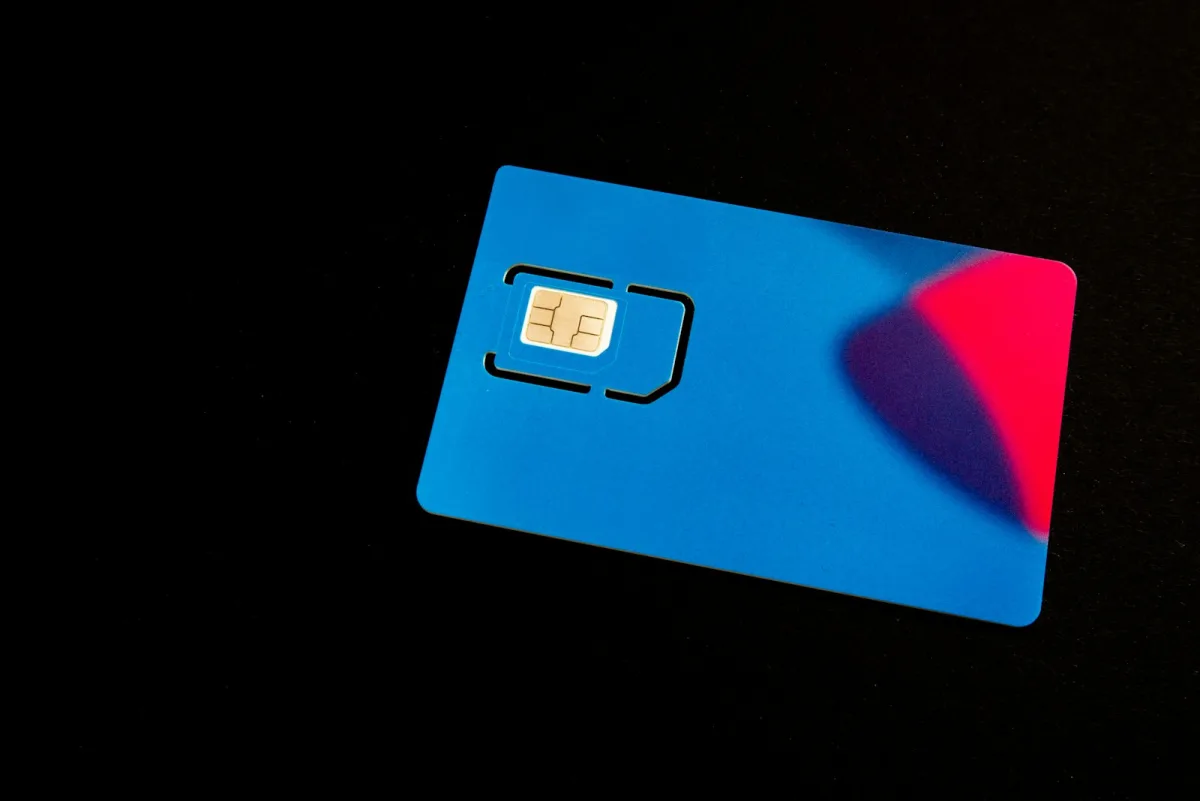
Almost everyone moving to Europe plans to get a local SIM. Almost nobody plans what to do with their American number, and then they find out the hard way that their bank won't let them log in without it.
Your US number isn't sentimental baggage. It's the key to your Chase account, your brokerage, your IRS login, and roughly every account you've opened in the last decade. Give it up carelessly and you can lock yourself out of your own money from 4,000 miles away.
The fix is a hybrid setup: park your US number on something cheap that still receives texts, and run a local European SIM for everything you actually do day to day. Here's what that costs, what the rules are, and the roaming trap that catches people who move rather than travel.
Key Facts at a Glance
| Question | Answer |
|---|---|
| Cheapest way to hold a US number | Ultra Mobile PayGo, $3/month for 100 minutes, 100 texts, 100 MB |
| Best all-round US parking line | Tello, $8/month for 2 GB and 300 minutes, Wi-Fi calling included |
| Google Voice port-in | $20 one-time, and it cancels your carrier line |
| ID needed for a German SIM? | Yes, verified before activation |
| Is that an EU-wide rule? | No, every country sets its own |
| Typical German prepaid | Around €9 to €10 per 4 weeks for 20 to 25 GB |
| Billing gotcha | German prepaid bills every 4 weeks, so 13 payments a year |
| EU roaming | Included, but there are limits once you live abroad |
Why Your US Number Is So Hard to Give Up
Two-factor authentication is the whole problem. US banks lean on SMS codes far more heavily than European ones do, and many of them refuse to text anything they think is an internet phone number. Fidelity, Chase, Schwab, and the IRS all fall into this camp to varying degrees.
So the goal isn't nostalgia. It's keeping a real, carrier-issued US mobile number that can receive a text while you're sitting in an apartment in Berlin.
The good news: that costs about $3 to $8 a month. The bad news: most people find this out after they've already cancelled their line.
Three Ways to Keep Your US Number Alive
Park it on a cheap US plan
This is the option that works for most people, and it's the one to default to.
Tello's cheapest workable plan runs $8 a month for 2 GB and 300 minutes. Unlimited texting is included on every plan, and so is Wi-Fi calling, which is the part that matters. Wi-Fi calling routes your calls and texts over the internet, so your US line keeps working from your German living room without touching a roaming network. Worth knowing: Tello won't let you build a plan with no data and no minutes at all, so $8 is the realistic floor rather than the $5 figure people quote.
Ultra Mobile's PayGo plan goes cheaper at $3 a month for 100 minutes, 100 texts, and 100 MB of data, with overage at 3 cents a minute, 1 cent a text, and 3 cents per MB. Ultra Mobile offers Wi-Fi calling across its plans, and PayGo will carry voice and SMS roaming out of your wallet balance, though it doesn't include data roaming. For a line whose only job is catching a login code, none of that is a problem.
Either way, turn Wi-Fi calling on before you fly. It's buried in your phone's settings, it needs a US address on file for emergency calls, and it's much easier to set up while you're still in the country.
Convert it to an eSIM
If your phone supports eSIM, switch your US line over to one before you leave. Your American number then lives digitally on the phone, which frees the physical SIM tray for a European card. Both lines run at once, and you stop swapping little pieces of plastic in and out at the worst possible moments.
Do this while you're still in the US. Some carriers want to verify the device or send an activation code to the old physical SIM, and that's a miserable thing to troubleshoot from another continent.
Port it to Google Voice
Google charges $20 to port a mobile number in, and it takes up to two days. After that your number lives in an app and works anywhere you have internet.
There are two catches, and the second one is the one that bites. First, Google Voice is a VOIP service, and a meaningful number of US banks simply refuse to send 2FA codes to VOIP numbers, which defeats the entire purpose. Second, porting your number to Google Voice cancels your carrier service. The line is gone. If you later decide you wanted a real mobile number after all, you're starting over.
Google Voice is a decent home for a number you want to keep for friends and family. It's a bad home for the number your bank knows.
Getting a Local SIM: The Rules Are National, Not European
Here's a claim you'll see repeated across expat sites, and it's wrong: that European law requires ID for every SIM card.
There is no EU rule. The Council of the European Union said so plainly in a January 2025 note on prepaid cards: access to prepaid SIMs isn't regulated at EU level, and because the rules were never harmonised, some member states demand registration while others let you walk out of a shop with a working SIM and no questions asked.
What's true is that individual countries impose their own rules, and Germany's are strict. German telecoms law requires providers to collect and verify your name, address, and date of birth before the SIM is switched on, and it applies to prepaid exactly as it does to contracts. A passport works. So does a national ID card, a residence permit, or an official photo ID. You don't need to have completed your Anmeldung first, and you don't need a German bank account.
In practice you'll verify in one of three ways: in a shop with your passport, by video call, or at a post office via PostIdent. The video option is usually fastest, and it works from a hotel or an Airbnb.
If you're moving somewhere else in Europe, check that country's rules rather than assuming Germany's apply. The Netherlands, for one, has never introduced a registration requirement, which is exactly the kind of variation the Council was complaining about.
What to Buy in Germany
All of these include EU roaming and all of them bill every 4 weeks rather than monthly, which is the detail nobody mentions. Thirteen billing cycles a year means your real annual cost sits about 8% above the headline number.
| Plan | Price | Data | Good for |
|---|---|---|---|
| Aldi Talk Kombi-Paket S | €8.99 / 4 weeks | 25 GB | Best value, flat calls and texts |
| Telekom MagentaMobil Prepaid M | €9.95 / 4 weeks | 20 GB | Best network coverage, unused data rolls over |
| Vodafone CallYa Allnet Flat S | €9.99 / 4 weeks | 25 GB | Wi-Fi calling included |
| Lebara | €4.99 / 4 weeks | 3 GB | 50 minutes of international calls, US included |
| Vodafone CallYa Classic | €0 / 4 weeks | pay per use | Holding a German number for free |
That last row is the one worth reading twice. CallYa Classic has no base fee at all. You pay 9 cents a minute and 3 cents a megabyte only when you use it, and it still includes Wi-Fi calling and EU roaming. If you want a German number for your bank, your landlord, and your delivery apps but you live on wifi anyway, you can hold one indefinitely for nothing.
Lebara is worth a second look if you still make real phone calls to the States. Its entry tariff runs €4.99 per 4 weeks for 3 GB with unlimited German calls and texts, and it throws in 50 minutes of international calling to a list of countries that includes the US. That won't replace WhatsApp for talking to your family, but it's handy the day you have to sit on hold with an American bank or the IRS from a German landline-free apartment.
Two traps to avoid. Telekom's cheapest tier, MagentaMobil Prepaid S at €4.95, looks tempting until you notice its flat rate only covers calls inside Telekom's own network, with just 50 minutes to other German networks. And Aldi Talk's starter set costs €9.99 up front, though it comes loaded with €10 of credit, so it roughly washes out.
You'll find these in supermarkets, at airport kiosks, and in electronics shops like MediaMarkt and Saturn. Most now offer an eSIM you can activate by QR code, which means you can be connected before you've found your apartment.
The Roaming Rule That Catches People Who Move
Roam Like at Home is genuinely excellent. Take your German SIM to Portugal and you pay German rates. No surcharge, no drama.
But it was written for travellers, not for people who relocate, and there's a fair use policy underneath it that most guides never mention.
Your operator can watch your usage over a rolling four month window. If, across those four months, you spend more time abroad than at home and use more data abroad than at home, both conditions together, they can contact you. You get 14 days to explain yourself. After that they're allowed to add a surcharge, capped at €1.30 per gigabyte in 2025 and dropping to €1 per gigabyte from 2027, plus small per-minute and per-text amounts.
For most readers this never comes up. You move to Germany, you buy a German SIM, you use it in Germany. Germany is now home, and nothing triggers.
It matters if you do one of two things. If you buy a German SIM because a friend recommended Aldi Talk and then actually settle in Spain, you're the exact case the policy targets, and eventually it catches up with you. Buy your SIM in the country you're living in. Likewise, if you keep a US line permanently roaming on European networks instead of using Wi-Fi calling, expect your American carrier to take an interest, since their terms assume the line mostly lives in the States.
If you work across a border, living in one EU country and commuting to another, you're fine as long as you connect to your home network at least once a day.
Running Both Lines Day to Day
Once you land, the setup settles into something simple.
Your European SIM handles everything: data, local calls, the delivery driver, the Bürgeramt, your landlord. Your US line sits quietly in the background over Wi-Fi calling, doing nothing except catching the occasional bank code. Set your phone to use the European line as default for data and calls so you never accidentally dial out on the American one.
Then do the unglamorous part. Go through your US accounts and move 2FA off SMS wherever the option exists. An authenticator app doesn't care what country you're in, and every account you migrate is one less reason to depend on a number you're paying to keep alive. Some banks will let you switch in five minutes. Others will make you call them, which is its own argument for keeping that US line working.
For the rest of the first-month checklist, our guide to your first 30 days in Europe covers registration, banking, and health insurance in order.
Frequently Asked Questions
Can I keep my US phone number after moving to Europe? Yes. The cheapest reliable way is to park it on a low-cost US carrier like Ultra Mobile PayGo at $3 a month or Tello at $8 a month, and turn on Wi-Fi calling so it works over the internet from Europe.
Will my US bank still send 2FA codes to Europe? Usually, as long as your number stays with a real mobile carrier and you have Wi-Fi calling switched on. Many US banks refuse to send codes to VOIP numbers, which is why porting to Google Voice can quietly break your bank logins.
Do I need a passport to buy a SIM card in Germany? Yes. German law requires providers to verify your name, address, and date of birth before activating any SIM, prepaid included. A passport, national ID, or residence permit all work, and you can verify by video call rather than in person.
Is that the same everywhere in Europe? No. SIM registration isn't regulated at EU level, so it varies by country. Germany requires it, the Netherlands doesn't. Check the rules where you're actually moving.
Can I use my German SIM in other EU countries? Yes, at domestic rates. But if you end up spending more time and using more data abroad than in Germany over four months, your operator can add a capped surcharge. If you're settling in another country, buy your SIM there instead.
How much does a prepaid SIM cost in Germany? Around €9 to €10 per 4 weeks for 20 to 25 GB with unlimited calls and texts. Note the 4-week cycle, which works out to 13 payments a year rather than 12.
Getting your phone sorted is one of those small things that quietly decides how smooth your first month feels. Do it in the right order, before you fly rather than after, and you'll never think about it again.
Official sources:
- gesetze-im-internet.de, German Telecommunications Act §172, SIM identity verification rules
- Council of the European Union, January 2025 note confirming prepaid SIM access is not regulated at EU level
- Your Europe, European Commission, roaming rules and fair use policy
- alditalk.de, Aldi Talk prepaid tariffs
- telekom.de, Telekom MagentaMobil Prepaid tariffs
- vodafone.de, Vodafone CallYa prepaid tariffs
- lebara.de, Lebara prepaid tariffs
- tello.com, Tello plan pricing and Wi-Fi calling
- ultramobile.com, Ultra Mobile PayGo pricing
- Google Voice Help, number porting fees and requirements