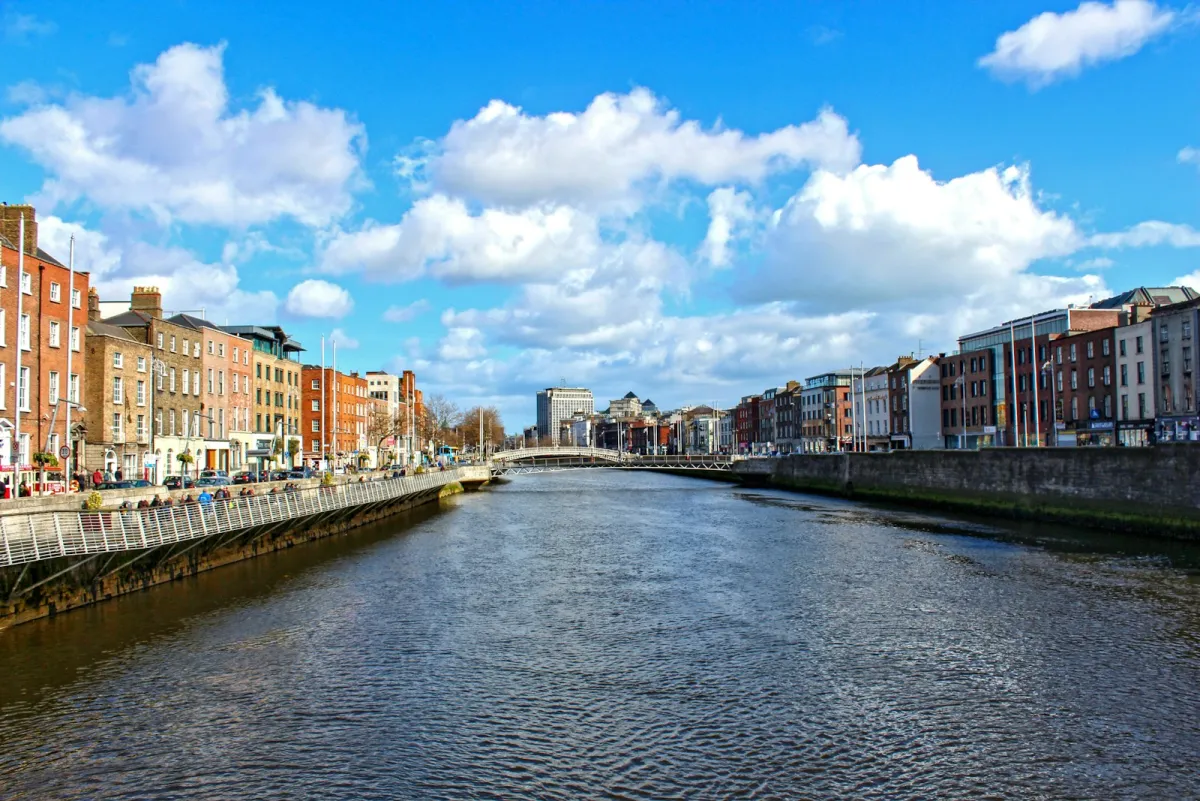
Ireland has one thing no other EU country can offer an American: it works in English. No language barrier, no year of night classes before you can talk to your landlord, no ceiling on your career because your German isn't good enough. For a lot of US professionals, that alone puts Dublin at the top of the list.
It's also where Google, Apple, Meta, Microsoft and half of big tech run their European operations, so the jobs are real and they're senior. But Ireland asks for two things in return that the brochures skip: some of the most expensive, scarcest housing in Europe, and a healthcare system that is not free at the point of use the way most of the continent's are.
Here's the honest version, with the numbers behind it.
Key Facts at a Glance
| Detail | Info |
|---|---|
| Population | ~5.4 million |
| Language | English (and Irish) |
| Currency | Euro (EUR) |
| Main work visa | Critical Skills Employment Permit (Ireland is not in the EU Blue Card system) |
| Critical Skills salary floor | €40,904 for listed occupations, €68,911 otherwise |
| Path to Stamp 4 | Apply after 21 months, no employer support letter needed |
| Average earnings | ~€52,000/year; tech sector runs far higher |
| Top tax rate starts at | €44,000 for a single person |
| Dublin average rent | €2,154/month |
| Healthcare | Public but not free at point of use; most professionals buy private cover |
| The catch | Housing. It is genuinely hard |
Your Work Visa: The Critical Skills Employment Permit
First, clear up a common mistake: Ireland does not use the EU Blue Card. It opted out of that system and runs its own employment permits. For skilled professionals, the one that matters is the Critical Skills Employment Permit, and it's one of the most attractive skilled-migration routes in Europe.
The salary thresholds are:
- €40,904/year for occupations on the Critical Skills Occupations List that require a degree, which covers most tech, engineering, and other in-demand professional roles.
- €36,848/year if you graduated within the last 12 months and are filling one of those roles.
- €68,911/year for jobs not on the list, where a degree isn't required but relevant experience is.
What makes it strong is what comes with it. The permit is tied to a job offer of at least two years. Your family can join you immediately, and your spouse or partner can work in Ireland without needing their own employment permit. And here's the headline benefit: after 21 months, you can apply directly for a Stamp 4, an immigration permission that lets you live and work in Ireland without any employment permit at all. Since late 2023 you no longer even need a support letter from your employer to do it.
That 21-month route to effectively unrestricted residence is faster than most of Europe, and it's the single biggest reason Ireland punches above its weight for ambitious professionals. For roles that don't qualify for Critical Skills, the General Employment Permit is the fallback, with a lower salary floor but a slower, more conditional path.
Salaries: What Professionals Earn
Ireland pays well by European standards, and the tech sector pays very well.
Average weekly earnings across the whole economy were about €1,004 in late 2025, which annualises to roughly €52,000. But averages hide the story for our readers. The information and communication sector, which is where the multinationals sit, recorded median weekly earnings of about €1,440, or roughly €75,000 a year, and senior roles at the big firms run well beyond that.
For how Irish tech pay compares to the US and the rest of Europe, our data piece on US tech salaries in Europe puts real numbers side by side. And if you want the lived version, one American's move from Boston to a Google job in Dublin walks through the whole job search.
Taxes: The 40% Rate Arrives Early
This is where Ireland surprises people, and not pleasantly. The rates themselves look simple, two bands, but the threshold is the catch.
- 20% on income up to €44,000 for a single person.
- 40% on everything above that.
That €44,000 cut-off is low. It means a single professional on a normal tech salary is paying the top rate of income tax on a large slice of their pay. On top of income tax, two more deductions stack:
- USC (Universal Social Charge): a second income tax in all but name, rising through bands to 8% on income above €70,044.
- PRSI: social insurance at 4.2% of gross pay.
Add them up and the marginal rate on income above €70,000 lands around 52%. Ireland is not a low-tax country for employees, whatever its corporate-tax reputation suggests. Budget 2026 left the income tax rates and bands unchanged, so none of this eases in the coming year.
The Housing Crisis Is Real
Every honest guide to Ireland has to stop and say this plainly: housing is the hardest part of moving here, by a wide margin.
Ireland has not built enough homes for years, and Dublin in particular has far more people looking than there are places to rent. The Residential Tenancies Board, the official regulator, put the average Dublin rent at €2,154 a month at the end of 2025, and a newly listed two-bedroom apartment in the greater Dublin area runs higher still. Viewings draw crowds, good listings vanish in hours, and arriving without a place lined up means competing hard from day one.
The practical advice is the same advice every Dublin newcomer gives: line up short-term or company-provided accommodation for your first weeks, budget more for rent than you think you should, and treat the apartment search as a serious project, not an afterthought. It is the thing most likely to sour an otherwise great move, and going in with your eyes open is half the battle. Our guide to your first 30 days in Europe covers the wider setup, and the housing point is worth reading twice.
Healthcare: Not Free the Way You'd Expect
Americans often assume that moving to Europe means free healthcare. Ireland is the exception that breaks the assumption.
Ireland has a public health system run by the HSE, and legal residents can use it. But unlike most of Europe, it is not free at the point of use for most working people. Free GP care and free public care depend on a medical card or GP visit card, and both are means-tested with low income thresholds that a professional salary will exceed. So in practice, most people moving here for a good job will pay out of pocket to see a GP, and will face the public system's well-known waiting lists for anything non-urgent.
That's why private health insurance is normal here rather than a luxury. The large majority of professionals take a policy with one of the main insurers to get faster access and cover the gaps. Budget for it as a regular expense from the start, the way you would in the US, rather than assuming the state covers it.
Cost of Living
Between the rent and the healthcare, Dublin is one of the more expensive cities in Europe to live in, comparable to the pricier Western European capitals rather than a bargain.
The upside is that the salaries, especially in tech, are high enough to absorb it, and the rest of daily life, groceries, transport, eating out, is broadly in line with other Western European cities rather than exceptional. It's the rent line and the health-insurance line that make the Irish budget look different from, say, a Spanish or Portuguese one.
Why Ireland, and Why Not
Ireland is the obvious choice for a specific person: an English-speaking professional, often in tech, who wants to be inside the EU, keep working in their own language, and land a senior role at a company they already know. On those terms, few places compete, and the 21-month route to unrestricted residence sweetens it further.
It's the wrong choice if your priority is a low cost of living or a gentle landing. The tax bites early, the healthcare costs more than you'd expect, and the housing search can be genuinely stressful. Ireland rewards people who come for the career and the language and go in clear-eyed about the rest. If you're weighing it against warmer, cheaper options, our guide to the mistakes that sink most moves to Europe is worth a read first.
Frequently Asked Questions
Does Ireland use the EU Blue Card? No. Ireland opted out of the EU Blue Card system and runs its own employment permits. For skilled professionals the main route is the Critical Skills Employment Permit, which is generally faster and more generous than the Blue Card anyway.
How long until I can stay in Ireland without an employment permit? On a Critical Skills Employment Permit you can apply for a Stamp 4 after 21 months. A Stamp 4 lets you live and work in Ireland without any employment permit, and since late 2023 you no longer need a support letter from your employer to apply.
What salary do I need for a Critical Skills Employment Permit? €40,904 a year for occupations on the Critical Skills list that require a degree, which covers most tech and engineering roles, or €68,911 for jobs not on the list. Recent graduates filling listed roles have a reduced floor of €36,848.
Is healthcare free in Ireland? Not for most working people. Public healthcare exists, but free GP and public care are means-tested through medical cards, and a professional salary will usually exceed the limit. Most professionals pay to see a GP and take private health insurance for faster hospital access.
How much does it cost to rent in Dublin? The official regulator put the average Dublin rent at €2,154 a month at the end of 2025, and new listings run higher. Housing supply is tight, so line up accommodation before you arrive and budget generously.
Why is my Irish tax so high on a good salary? Because the 40% income tax rate starts at just €44,000 for a single person, and USC and PRSI stack on top. The marginal rate on income above €70,000 is around 52%. Ireland's low-tax reputation is about corporate tax, not what employees pay.
Ireland is the English-speaking door into the EU, and for the right professional that's worth a great deal. Come for the career and the language, sort your housing before you land, and budget for the tax and the health insurance, and it's one of the best moves in Europe. Underestimate the rent and you'll spend your first months stressed.
At Move2Europe, we help skilled professionals through the whole move, from the visa route to the details nobody warns you about.
Book a consultation and let's figure out your fastest path to Ireland.
Official sources:
- Department of Enterprise, Tourism and Employment, Critical Skills Employment Permit thresholds
- Immigration Service Delivery, Stamp 4 upgrades for permit holders
- Revenue, income tax bands, USC and PRSI
- Central Statistics Office, earnings by sector
- Residential Tenancies Board, official Dublin and national rent data
- Citizens Information, medical cards and healthcare eligibility