Germany isn't one city. It's seven very different cities, each with its own economy, vibe, job market, and cost of living — and the one you pick will shape your first year abroad more than almost any other decision you make.
Most people default to Berlin because it's the capital or Munich because they've heard of it. That's not a bad start, but it's also not a plan. The right city for a software engineer at a startup looks nothing like the right city for a finance professional chasing a banking role. This guide breaks it down honestly so you can choose based on your actual career, not the hype.
Key Facts at a Glance: Best Cities in Germany for Expats
| City | 1-Bed Rent (Centre) | Avg Net Salary | Quality of Life | Best For |
|---|---|---|---|---|
| Munich | €1,418/mo | €4,006/mo | 206.4 (5th in Europe) | Engineering, finance, tech, automotive |
| Berlin | €1,291/mo | €3,006/mo | 174.5 | Startups, tech, creative industries |
| Frankfurt | €1,153/mo | €3,936/mo | 204.3 | Finance, banking, consulting |
| Hamburg | €1,116/mo | €3,319/mo | 197.6 | Logistics, media, aerospace |
| Stuttgart | €1,118/mo | €3,852/mo | 202.8 | Automotive, engineering |
| Düsseldorf | €1,086/mo | €3,456/mo | 202.8 | Fashion, corporate, legal |
| Cologne | €1,025/mo | €3,064/mo | 177.9 | Media, TV, advertising |
Rent data: Numbeo April 2026. Quality of Life Index: Numbeo Europe Rankings 2026.
Berlin: The Startup Capital
If you're in tech, product, SaaS, or anything creative, Berlin is probably your city. It's the undisputed startup hub of Europe — the density of funded companies, English-speaking job boards, and international colleagues is like nowhere else in Germany.
The numbers back this up: 52% of the Berlin startup workforce is international, and over 180 nationalities live in the city. Many tech companies operate entirely in English. You can join a team at Zalando, N26, or one of hundreds of smaller startups and never need to speak German at work.
The trade-off is money. Berlin pays less than every other major German city. Average net salaries sit around €3,006/month — about €1,000 less than Munich. Software engineers earn €58,000–€65,000 gross on average, which sounds reasonable until you compare it with Munich's €75,000 for equivalent roles.
That said, Berlin is also the most affordable major city in Germany. Rent averages €1,291/month for a one-bedroom in the centre, and the overall cost of living is noticeably lower. If you're earlier in your career or optimising for experience over income, Berlin often makes more financial sense than it looks on paper.
Berlin's job market changes fast. The startup scene that was booming in 2021 went through real contraction in 2023–2024. It's recovered, but do your homework on the specific company before you move for it — stage, funding, and runway matter.
Who Berlin is for: tech professionals, product managers, UX designers, marketers, anyone in the startup ecosystem, and creative industries. Also expats who want an active international social scene and don't need the German language to function professionally.
Munich: The Premium Option
Munich is Germany's most livable city by almost every measure. Numbeo ranks it 5th in all of Europe for quality of life in 2026. The unemployment rate in Bavaria sits at 3.9% — the lowest in the country. Salaries are the highest in Germany. And it's 45 minutes from the Alps.
The job market is anchored by engineering and finance: BMW, Siemens, Allianz, and MunichRe all have their headquarters here. Tech is growing fast too — Munich has developed a serious ecosystem of deep-tech and enterprise software companies that complements, rather than competes with, Berlin's startup scene. The roles are typically more senior and better paid.
The catch is that Munich is expensive. Rents average €1,418/month for a one-bedroom in the centre — the highest in Germany — and the housing market is the tightest in the country. Plan for 2–3 months of temporary housing before finding a permanent flat. The payoff is that salaries here (€75,000+ gross for senior engineers, €70,000–€85,000 for finance) justify the cost for most skilled professionals.
German matters more in Munich than in Berlin. The city has an international professional scene, but outside of multinational company offices, you'll encounter more German in daily life than anywhere else on this list.
Who Munich is for: engineers (automotive, mechanical, aerospace), senior tech professionals, finance and insurance professionals, and anyone who prioritises quality of life, outdoor activities, and long-term stability over startup culture.
Frankfurt: Europe's Financial Hub
If you work in finance, Frankfurt is a different conversation entirely. The European Central Bank is here. So are Deutsche Bank, Commerzbank, Deutsche Börse, and the German financial regulator (BaFin). Post-Brexit, 62 major financial firms relocated their EU operations here — Goldman Sachs, JPMorgan, Citigroup, Morgan Stanley, Barclays all expanded their Frankfurt presence significantly.
This makes Frankfurt the highest-paying city in Germany for skilled professionals on average — around €66,500 gross annually across financial services roles, with senior investment banking and trading positions reaching well above that.
Frankfurt is also the most connected city in Germany. Frankfurt Airport is Europe's second-busiest hub, which matters a lot if you travel for work or want easy access to the rest of Europe on weekends. The city centre is compact and walkable, the English-speaking community is large, and the pace of life is brisk.
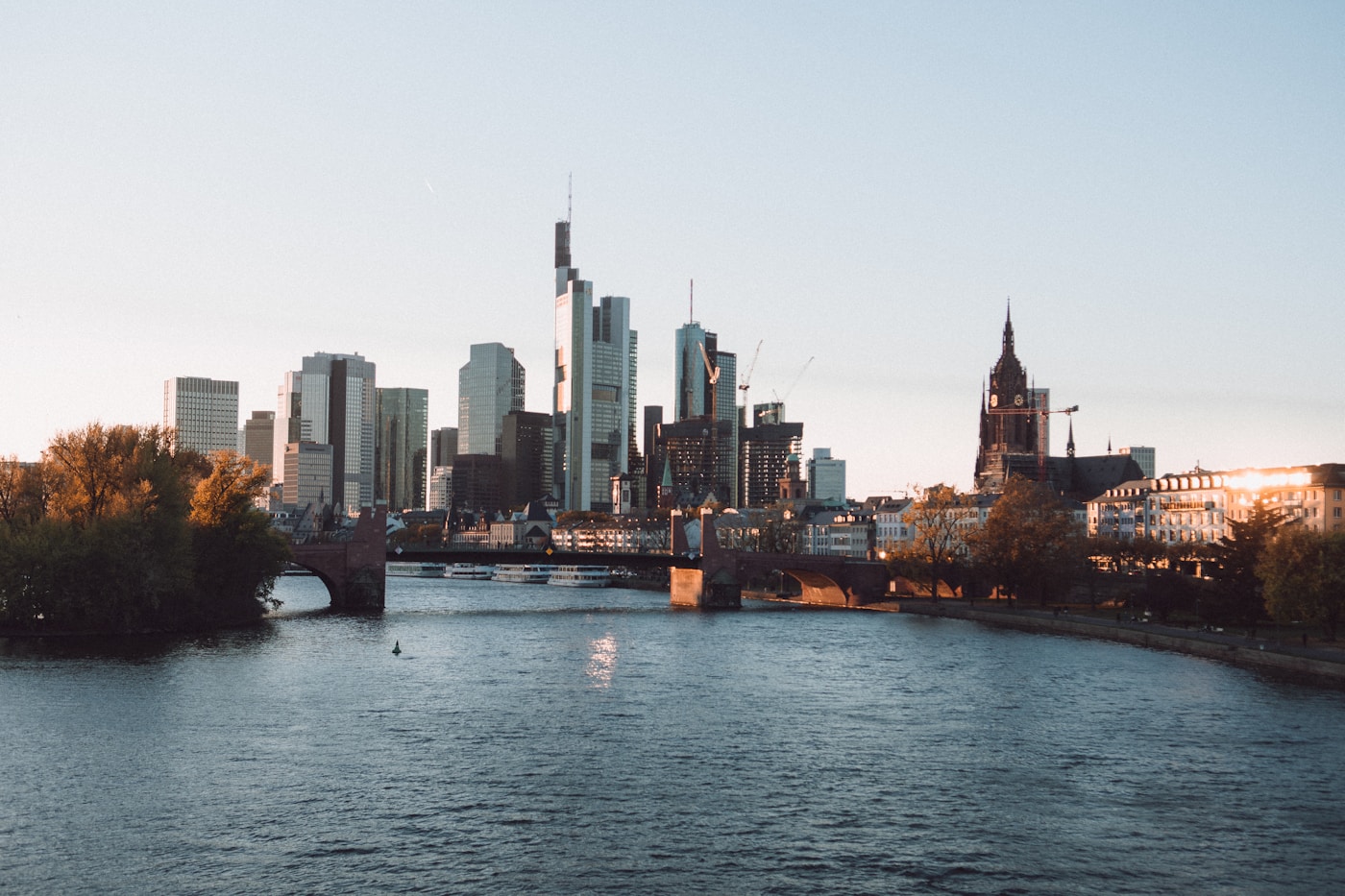
It's not a city that people describe as beautiful or romantic — the skyline is more Manhattan than Munich. But for finance, consulting, or law, it's the best job market in Germany, and the quality of life score (204.3 on Numbeo) reflects a genuinely good place to live.
Who Frankfurt is for: finance professionals, investment bankers, asset managers, lawyers, and consultants. Also tech professionals who want proximity to financial services clients.
Hamburg: The Underrated Option
Hamburg doesn't get enough credit. It's Germany's second-largest city, one of Europe's most important ports, and it has a job market that covers an unusual range of industries — logistics, aerospace (Airbus has its primary production facility here), media, advertising, gaming, and a fast-growing digital sector.
The international community is well-established (20% of Hamburg residents are foreign-born), and the city is known for being open and cosmopolitan in a way that feels different from the more corporate cities on this list. Quality of life ranks 8th in Europe on Numbeo 2026.
Hamburg is slightly cheaper than Munich and Frankfurt on rent (€1,116/month average for a one-bedroom), and public transport is among the cheapest of the major cities (€58/month). Salaries for skilled professionals run €56,000–€65,000 gross on average — lower than Munich and Frankfurt, but the cost-of-living balance is arguably better.
If you work in media, publishing, gaming, or logistics, Hamburg often has better opportunities than cities that get more attention. Check job boards specifically for Hamburg before assuming Berlin is your only option.
Who Hamburg is for: logistics and supply chain professionals, aerospace engineers, media and advertising professionals, and people who want a cosmopolitan but less hyper-competitive environment than Berlin or Munich.
Stuttgart: The Engineer's City
Stuttgart is where you go if you're an engineer — specifically automotive or mechanical. Mercedes-Benz, Porsche, and Bosch all have their headquarters in or around Stuttgart. The automotive software ecosystem that's grown up around them is significant, with demand for embedded systems, ADAS, and EV software engineers particularly strong.
Financially, Stuttgart is the most interesting city on this list for a specific reason: it ranks first in Germany (and near the top globally) on Numbeo's Local Purchasing Power Index. Translation — salaries here go further relative to costs than in any other major German city. Engineers can earn €70,000–€90,000 in automotive software roles, and the cost of living is lower than Munich or Frankfurt.
The downside is that Stuttgart is less international than the other cities. English proficiency among the general population is around 62%, which is lower than Berlin or Frankfurt. German will genuinely improve your daily life here more than in other cities on this list. The city itself is surrounded by vineyards and the Black Forest, which appeals to some people and is irrelevant to others.
Who Stuttgart is for: automotive engineers, mechanical engineers, embedded software developers, and anyone in the automotive supply chain. Less suited to startup-focused tech professionals or those who need a large English-speaking social scene.
Düsseldorf: The Corporate Hub of the Rhine
Düsseldorf sits in the middle of NRW — the most densely populated region in Germany, home to Cologne, Dortmund, and the broader Rhine-Ruhr megalopolis of 10 million people. The city itself is smaller than the others on this list, but it punches above its weight professionally: three DAX-listed companies are headquartered here, and there are 1,798 English-language jobs listed on Glassdoor as of early 2026.
One thing that's genuinely unusual about Düsseldorf: it has the largest Japanese business community in Germany and the third-largest in Europe. The Immermannstraße area is known as "Little Tokyo" — Japanese schools, restaurants, clubs, and corporate offices cluster there. If you work for a Japanese multinational or in sectors where Japanese companies are active (automotive, trading, pharma), Düsseldorf is worth considering specifically.
Rent averages €1,086/month — the second-cheapest of the seven cities. Quality of life (202.8) is strong, on par with Stuttgart. The Königsallee shopping district and the Rhine riverfront give it a high-end lifestyle feel despite being a relatively compact city.
Who Düsseldorf is for: corporate professionals, lawyers, consultants, fashion and retail industry workers, and professionals with connections to Asian multinationals.
Cologne: The Affordable Creative City
Cologne has the lowest average rents of the seven cities (€1,025/month) and a job market centred on media, advertising, and broadcasting. RTL, Europe's largest commercial broadcaster, is headquartered here. WDR, Deutsche Welle, and a cluster of TV production companies make Cologne the centre of Germany's television industry. Gamescom — the world's largest gaming trade fair — is held here annually, and the games sector is active.
It's also the most sociable city in Germany. Cologne has a reputation for being open, warm, and friendly in a way that even Germans from other cities acknowledge. The Rhine promenade is lively, there's a genuine carnival culture, and the city is easy to navigate.
The trade-off is that average net salaries (€3,064/month) are lower than Frankfurt, Munich, or Hamburg. If you're chasing maximum earning potential, Cologne isn't the answer. If you're in media, creative, or advertising and want to live well without paying Munich prices, it's worth taking seriously.
Who Cologne is for: media professionals, TV and film industry workers, advertising and PR, gaming industry, and anyone who wants a vibrant social scene with more affordable costs.
How to Choose the Right City
Here's a simple framework:
- Highest salary potential: Frankfurt (finance), Munich (tech/engineering)
- Best for startups and tech: Berlin
- Best salary-to-cost ratio: Stuttgart (for engineers), Hamburg (for a balanced life)
- Most affordable with good quality of life: Cologne, Düsseldorf
- Most English-friendly: Berlin, Frankfurt
- Best for long-term stability and quality of life: Munich
One practical thing: Germany has 1.5 million+ open job vacancies right now, and 163 official shortage occupations. If you hold an EU Blue Card, you can live and work in any German city — and switch employers freely after 12 months. The visa doesn't lock you to a location, so choosing a city is really about matching your career to the right job market.
For a full breakdown of what settling in each city actually costs, see our cost of living in Germany guide.
At Move2Europe, we help professionals figure out not just which country to target, but which city gives them the best chance of landing the right role — then we help them get there.
Book a free consultation and let's map out your city and your move.
Frequently Asked Questions
Which city in Germany is best for expats? It depends on your industry. Berlin is best for startups and tech; Frankfurt is best for finance; Munich offers the highest salaries and quality of life for engineers; Hamburg is best for logistics and media. There's no single "best" city — the right answer depends on what you do.
Which German city has the most English-speaking jobs? Berlin and Frankfurt are the most English-friendly. Berlin's startup scene operates almost entirely in English, and Frankfurt's international finance sector uses English as a working language. Munich has many English-speaking roles in tech and multinationals, but German is more useful for daily life there.
Is it hard to find a job in Germany as an American? Not if your skills are in demand. Germany has 1.5 million+ unfilled vacancies and 163 official shortage occupations. Tech, finance, engineering, and healthcare professionals are actively recruited. The EU Blue Card makes the visa process relatively straightforward for skilled professionals earning above the threshold (€50,700 gross for most roles in 2026).
Which German city has the lowest cost of living? Among the major cities, Cologne has the lowest average rents (€1,025/month for a 1-bedroom in the centre). Düsseldorf is also affordable at €1,086/month. Berlin is the cheapest of the traditionally "big" cities. Stuttgart offers the best purchasing power relative to salary — your money goes furthest there even though rents aren't the lowest.
Do I need to speak German to work in Germany? Not for most roles in tech, finance, and international companies. For the EU Blue Card, there's no language requirement. However, German significantly improves daily life, speeds up your permanent residency timeline (B1 gets you there in 21 months instead of 27), and is required for citizenship. Start learning as soon as you decide to move.
What is the average salary for expat professionals in Germany? It varies significantly by city and sector. Frankfurt averages the highest for skilled professionals (~€66,500 gross), followed by Munich (€62,000–€75,000 for tech/engineering). Berlin runs lower (~€58,000 for software engineers) but has lower costs. The national average gross salary is around €53,000/year.
Official sources:
- Numbeo Germany Cost of Living — City-level rent, salary, and quality of life data
- Make it in Germany — Official government portal for skilled immigration
- BAMF Blue Card Statistics — EU Blue Card issuance data
- Bundesagentur für Arbeit — Federal Employment Agency, vacancy and shortage occupation data