Italy isn't really a place you visit. It's a place you taste. History, art, and everyday life all run through the kitchen here, and if you're thinking about moving to Europe and Italy is on your list, a map and a visa checklist will only get you so far. To understand the country, you have to understand its table.
Food in Italy is the main language of family, community, and love. It respects the season, the local soil, and techniques handed down for generations. Eating here is a ritual that somehow manages to be both completely simple and absolutely exacting at the same time. Here's a tour of that culture, starting with the holy trinity of the Italian table: pizza, pasta, and tiramisu.
Key Facts at a Glance
| Dish | Home region | What makes it |
|---|---|---|
| Pizza Napoletana | Naples (Campania) | Soft, blistered crust, 60–90s in a wood-fired oven |
| Carbonara | Lazio (Rome) | Guanciale, pecorino, egg, black pepper |
| Tortellini in brodo | Emilia-Romagna | Meat-filled pasta in a rich capon broth |
| Trofie al pesto | Liguria | Fresh basil pesto, pine nuts, garlic |
| Pasta alla Norma | Sicily | Fried eggplant, tomato, salted ricotta |
| Tiramisu | Treviso (Veneto) | Savoiardi, mascarpone, espresso, cocoa |
The Pizza Story Starts in Naples
The story of pizza is really the story of Naples. Flatbreads with toppings existed all over the Mediterranean for centuries, but the pizza we'd recognise today grew up in the shadow of Mount Vesuvius.
You'll hear the famous origin story everywhere: that in 1889 the Neapolitan pizzaiolo Raffaele Esposito made a pizza for the visiting Queen Margherita in the colours of the new Italian flag, red tomato, white mozzarella, green basil, and that her approval turned street food into a national treasure. It's a lovely tale, and worth knowing, but it's worth holding loosely too. Food historians have poked serious holes in it: the same flag-coloured pizza was being eaten in Naples decades earlier, and the royal thank-you letter that anchors the legend has real authenticity problems. The honest version is that the Margherita is a beloved story as much as a documented fact.
What isn't in doubt is the craft. True Pizza Napoletana has a soft, pillowy rim (the cornicione) and a thin, moist centre, and it cooks in just 60 to 90 seconds in a blistering wood-fired oven. It's taken so seriously that Neapolitan pizza-making was added to UNESCO's list of intangible cultural heritage in 2017. Romans do it differently: Pizza Romana is thin and cracker-crisp, the kind locals call scrocchiarella. And a pizzeria here is a social hub, not a delivery transaction, pizza is a communal evening out, traditionally with a cold beer or sparkling water rather than wine.
Pasta: The Geometry of Flour and Water
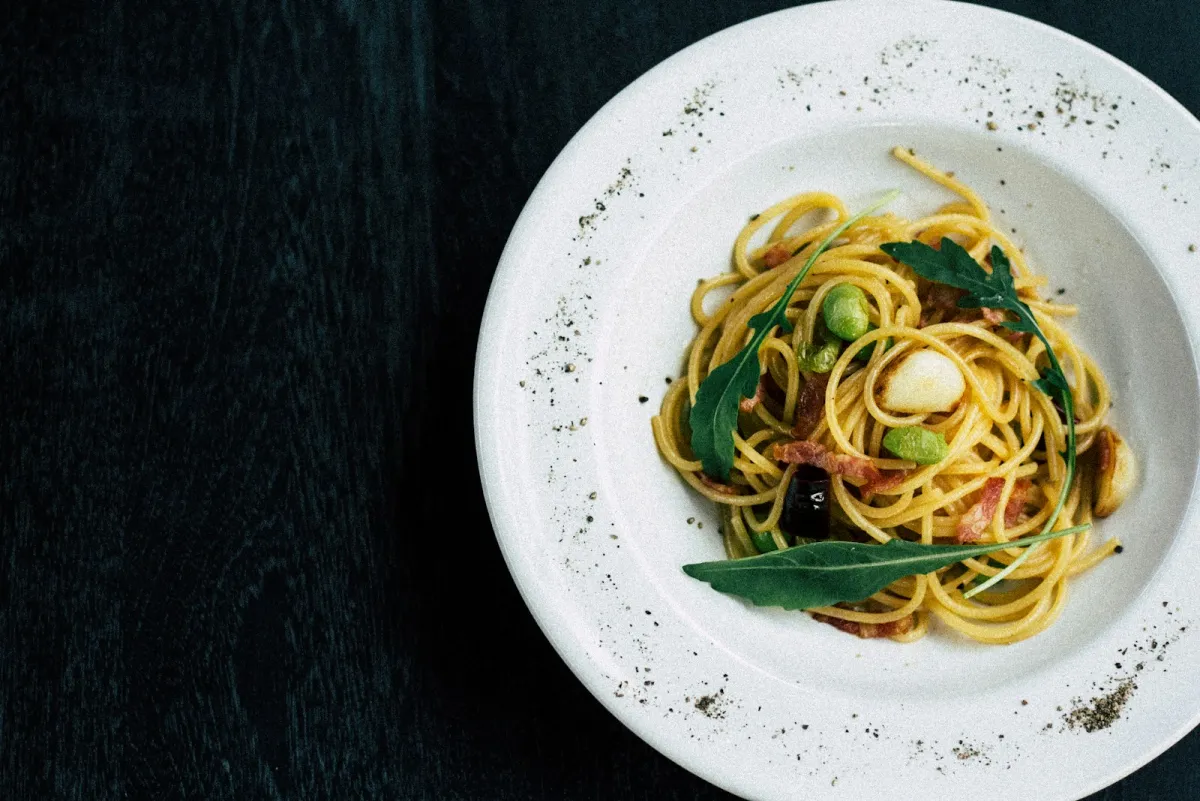
If pizza is Italy's icon, pasta is its soul. There are somewhere north of 300 recognised pasta shapes, and they aren't arbitrary, each is engineered to hold a particular kind of sauce.
The clearest split is north versus south. The historically wealthier north, with its French influences, leans on pasta fresca: fresh pasta made with soft wheat and eggs, like the golden ribbons of tagliatelle in Bologna or the stuffed agnolotti of Piedmont. The south is the land of pasta secca, dried pasta made from durum wheat semolina and water. The dry southern climate was perfect for air-drying it, which gave us shapes like orecchiette and penne with their firm, al dente bite.
That phrase, al dente, "to the tooth," is non-negotiable. To an Italian, mushy overcooked pasta isn't just a mistake, it's an insult. Keeping a bit of bite lets the flavour of the grain hold its own against the sauce.
Tiramisu: The "Pick-Me-Up"
Pizza and pasta have ancient roots. Tiramisu is practically modern. The name literally means "pick me up," a nod to the jolt of espresso, cocoa, and sugar.
Its origins are hotly contested, which is very Italian. The best-documented account traces it to the restaurant Le Beccherie in Treviso in the early 1970s, where it first appeared on the menu around 1972. The neighbouring region of Friuli-Venezia Giulia also claims it, pointing to earlier recipes. Wherever it truly began, it's now the quintessential Italian dessert, built on four things done well: airy savoiardi (ladyfingers), rich mascarpone, strong espresso to soak the biscuits, and a bitter dusting of cocoa to keep the sweetness honest.
Why "Italian Food" Is Really Twenty Cuisines
The most common newcomer mistake is treating "Italian food" as one thing. It isn't. Italy is a mosaic of twenty culinary regions, and the local pride that drives it even has a name: campanilismo, loyalty to your own bell tower. A dish that's everywhere in Milan can be a total stranger in Palermo.
You can taste the dividing line in the cooking fat. The alpine, cattle-farming north leans on butter, lard, and cream; head south into the olive groves and extra virgin olive oil becomes the lifeblood of every plate. Italy also leads Europe in protected food designations (the DOP and IGP labels), which legally tie products like Parmigiano Reggiano, Prosciutto di Parma, and Aceto Balsamico di Modena to their home turf. Learning your local specialities is one of the fastest ways to earn the respect of the people around you.
What This Means If You're Moving to Italy
Here's the part that matters for a move. Italy's quality of life is genuinely built around the table. The slow-food instinct, taking the time to eat well, with other people, using honest ingredients, isn't a marketing slogan, it's the daily texture of life. For anyone burned out on eating lunch at a desk, that's a real adjustment in the best way.
Italy also has practical routes in, including a digital nomad visa for remote workers, covered in our guide to Europe's digital nomad visas. And the same advice that applies to any European move applies here: pick your region deliberately and start early, our post on the mistakes that sink most moves to Europe walks through how to do that, and why 2026 is the year to move makes the broader case.
Frequently Asked Questions
Was pizza Margherita really invented for a queen? That's the popular legend, that Raffaele Esposito made it for Queen Margherita in 1889. Food historians dispute it, since the same flag-coloured pizza existed in Naples earlier and the royal letter behind the story is doubted. It's a great tale, but treat it as folklore rather than fact.
What's the difference between Neapolitan and Roman pizza? Neapolitan (Napoletana) has a soft, puffy, blistered crust and cooks in 60–90 seconds in a wood-fired oven. Roman (Romana) is thin and cracker-crisp, often called scrocchiarella. Neapolitan pizza-making is even recognised by UNESCO as intangible cultural heritage.
Why do Italians care so much about al dente pasta? Cooking pasta al dente ("to the tooth") keeps a firm bite, which preserves both texture and the flavour of the grain so it stands up to the sauce. Overcooked, mushy pasta is considered a genuine culinary error in Italy.
Where does tiramisu come from? The best-documented origin is the restaurant Le Beccherie in Treviso, in the Veneto region, in the early 1970s. The region of Friuli-Venezia Giulia also claims it, so the exact birthplace is still debated.
Is Italian food the same across the country? No. Italy has twenty distinct culinary regions, and dishes vary enormously from north to south, right down to whether the kitchen cooks with butter or olive oil. Learning the local specialities of wherever you settle goes a long way.
Official sources:
- Italian National Tourism Board (ENIT / Italia.it), official guide to Italy's regions, food, and culture
- European Commission, Geographical indications (DOP/IGP), EU's protected food designation system
- UNESCO, Art of Neapolitan "Pizzaiuolo", intangible cultural heritage listing for Neapolitan pizza-making