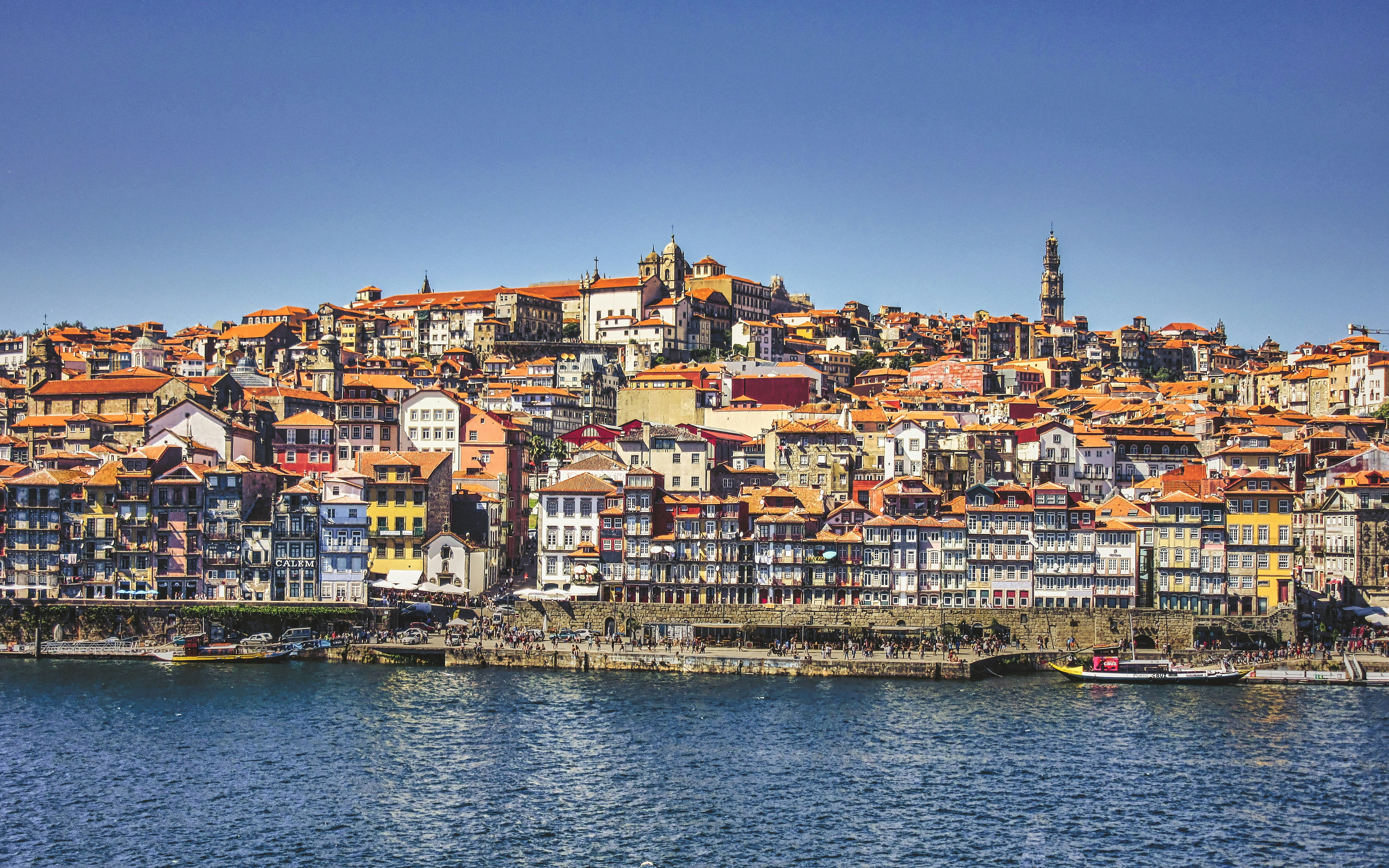
Everyone knows about Berlin, Amsterdam, and Barcelona. They're great cities, but they're also expensive, competitive, and crowded with other expats chasing the same opportunities. Meanwhile, some of the best places to build a career and a life in Europe barely show up on anyone's radar.
These eight cities won't top the usual "move to Europe" listicles. But they offer something the popular destinations increasingly don't: affordable housing, growing job markets, genuine local culture, and the chance to get in before everyone else catches on.
1. Valencia, Spain
Valencia has been quietly climbing the ranks of Europe's most liveable cities, and in 2025 it was named the world's best city for expats by InterNations for the second year running.
The appeal is straightforward: Mediterranean climate, a beach, a cost of living roughly 30-40% lower than Barcelona or Madrid, and a growing tech scene that's attracting both startups and remote workers.
The numbers
- Population: ~1.6 million (metro area)
- Average rent (1-bed, centre): EUR 800-1,100/month
- Monthly budget (single person): EUR 1,400-2,000 including rent
- Average tech salary: EUR 30,000-45,000/year gross
- Language: Spanish (Valencian is co-official but not required)
Why it works
Valencia's tech ecosystem has grown significantly. The city hosts Lanzadera, one of Spain's largest startup accelerators (backed by Mercadona's founder), and has become a hub for remote workers and digital nomads thanks to Spain's digital nomad visa.
The port area has been redeveloped into a modern innovation district. International companies including Capgemini, Deloitte, and Accenture have offices here, and the startup scene is producing companies in fintech, healthtech, and logistics.
The lifestyle is hard to beat. The City of Arts and Sciences is world-class. The beach is 15 minutes from the centre by bike. The famous Las Fallas festival is unlike anything else in Europe. And the food scene — paella was invented here — is outstanding without the tourist markup you'd pay in Barcelona.
The catch
Salaries are lower than Madrid or Barcelona, and many good roles still require Spanish. The job market is growing but still limited compared to bigger Spanish cities. Valencia's rental market has also tightened considerably since 2024, with prices up 15-20% as the city's popularity has surged.
2. Tallinn, Estonia
Estonia built its reputation on e-Residency, Skype, and being the most digitally advanced country in the world. Tallinn is where all of that lives — a compact, tech-forward capital where almost everything government-related happens online.
The numbers
- Population: ~460,000
- Average rent (1-bed, centre): EUR 700-1,000/month
- Monthly budget (single person): EUR 1,400-1,900 including rent
- Average tech salary: EUR 35,000-55,000/year gross
- Language: Estonian (English is the working language in tech)
Why it works
Tallinn has produced more unicorns per capita than almost any city in Europe. Wise (formerly TransferWise), Bolt, Pipedrive, and Veriff all started here. The startup ecosystem is dense for a city this size, and the culture is genuinely founder-friendly.
The digital nomad visa was one of Europe's first, and the country's digital infrastructure is years ahead of most. You can set up a company in 15 minutes online. Tax filings take about 5 minutes. Healthcare appointments can be booked through an app.
For tech professionals, salaries have risen sharply. Senior developers can earn EUR 50,000-65,000, and the cost of living — while not the bargain it was five years ago — is still well below Scandinavian levels. Estonia's flat 20% income tax keeps things simple.
The old town is a UNESCO World Heritage site. In summer, the city comes alive with long days (19+ hours of daylight in June) and a thriving cafe and restaurant scene.
The catch
Winters are dark and cold — really cold. December gets about 6 hours of daylight. The city is small, and if you're coming from a major metropolis, Tallinn can feel quiet. Estonian is notoriously difficult to learn, though you rarely need it in professional settings. The job market outside tech is limited for non-Estonian speakers.
3. Brno, Czech Republic
Prague gets all the attention, but Brno — the Czech Republic's second city — is where a lot of the country's innovation actually happens. It's a university town with a young population, a growing tech sector, and a cost of living that makes Prague look expensive.
The numbers
- Population: ~400,000 (600,000+ metro)
- Average rent (1-bed, centre): EUR 550-800/month
- Monthly budget (single person): EUR 1,100-1,600 including rent
- Average tech salary: EUR 30,000-50,000/year gross (senior roles higher)
- Language: Czech (English common in tech and academia)
Why it works
Brno has five universities and over 65,000 students, giving it a young, international energy. Masaryk University and Brno University of Technology produce strong tech talent, and companies have noticed — Red Hat has its largest engineering office outside the US here, and other tech firms including Kiwi.com, AT&T, Honeywell, and IBM have significant operations in the city.
The South Moravian Innovation Centre (JIC) is one of the most active startup incubators in Central Europe. Brno's tech community is tight-knit and accessible in a way that Prague's isn't.
Cost of living is the real selling point. Rents are 30-40% lower than Prague for comparable apartments. A good meal out costs EUR 8-12. The monthly transit pass is about EUR 20. On a mid-level tech salary, you can live very comfortably and save money.
The city itself is walkable, has excellent public transport, and is surrounded by the wine country of South Moravia. Vienna is 1.5 hours away by train. Prague is 2.5 hours.
The catch
Brno is small. If you want a major-city feel with endless options for nightlife, dining, and cultural events, you might find it limiting. Czech is difficult, and while English works in tech, daily life outside that bubble can be challenging. The international expat community is growing but still modest compared to Prague.
4. Porto, Portugal
Lisbon has become the default choice for expats moving to Portugal, but Porto — the country's second city in the north — offers many of the same advantages at a lower price point, with a character entirely its own.
The numbers
- Population: ~1.3 million (metro area)
- Average rent (1-bed, centre): EUR 750-1,100/month
- Monthly budget (single person): EUR 1,400-1,900 including rent
- Average tech salary: EUR 25,000-45,000/year gross
- Language: Portuguese (English widespread in tech and tourism)
Why it works
Porto's tech scene has grown rapidly. The city hosts a growing number of tech companies and shared service centres, and the University of Porto produces strong engineering graduates. Companies like Farfetch (founded in Porto), Infinera, and Critical TechWorks (a BMW Group joint venture) have major offices here.
Portugal's Non-Habitual Resident (NHR) tax regime was replaced in 2024 by a new incentive for skilled workers and researchers, offering a flat 20% income tax rate for the first 10 years of Portuguese tax residency (for those who haven't been tax resident in Portugal in the prior 5 years). This makes Porto attractive from a tax perspective.
The city is stunning — the Ribeira district is a UNESCO World Heritage site, the Douro Valley wine region is a short drive away, and the Atlantic coast has some of the best surfing in Europe. The food scene is excellent and unpretentious. Port wine is essentially free.
Porto is also a gateway to Portugal's digital nomad visa, which requires a minimum income of EUR 3,510/month (4x the Portuguese minimum wage in 2026).
The catch
Portuguese salaries are among the lowest in Western Europe. If you're hired locally, your purchasing power won't stretch as far as the cost-of-living numbers suggest. Remote workers earning foreign salaries do much better. The rental market has tightened significantly due to tourism and the golden visa legacy. Porto's weather is rainier and cooler than Lisbon's, especially in winter.
5. Malaga, Spain
Malaga has transformed from a package-holiday gateway into one of Southern Europe's most exciting tech cities. Google opened its cybersecurity centre here. Vodafone moved its European R&D hub here. And the city's "Malaga TechPark" hosts over 630 companies.
The numbers
- Population: ~580,000 (city), ~1 million (metro)
- Average rent (1-bed, centre): EUR 850-1,200/month
- Monthly budget (single person): EUR 1,500-2,100 including rent
- Average tech salary: EUR 30,000-45,000/year gross
- Language: Spanish (English growing in tech sector)
Why it works
Malaga's tech transformation has been deliberate and well-funded. Malaga TechPark (PTA) is Andalusia's largest technology park, housing companies across cybersecurity, AI, and telecommunications. Google's Safety Engineering Center (GSEC) opened in 2023, and the ripple effect has been significant — attracting talent and investment to the wider ecosystem.
The lifestyle combination is the draw: 300+ days of sunshine, beaches, mountains (ski resort within 2 hours), and costs that are significantly lower than Barcelona or Madrid. The Soho arts district and the Centre Pompidou Malaga (the only branch outside Paris) have revitalised the city centre.
Spain's digital nomad visa (launched 2023) makes Malaga accessible to remote workers earning from abroad. The visa requires demonstrating regular income from foreign sources and offers a reduced tax rate of 24% on Spanish-sourced income for the first six years.
The catch
Malaga's rental market has been under serious pressure. Tourism-driven demand, short-term rental conversions, and the influx of remote workers have pushed prices up 20-30% since 2023. Some locals are priced out, and there's growing tension around gentrification. Salaries in Malaga are lower than Madrid or Barcelona, and many tech roles still require Spanish. August is brutally hot.
6. Ljubljana, Slovenia
Ljubljana is one of Europe's best-kept secrets — a green, walkable capital with a high quality of life, strong safety, and costs well below Western European levels. Slovenia sits at the crossroads of Central and Southern Europe, bordering Italy, Austria, Hungary, and Croatia.
The numbers
- Population: ~295,000
- Average rent (1-bed, centre): EUR 700-1,000/month
- Monthly budget (single person): EUR 1,300-1,800 including rent
- Average tech salary: EUR 30,000-48,000/year gross
- Language: Slovenian (English proficiency is very high)
Why it works
Slovenia consistently ranks among Europe's safest, greenest, and most liveable countries. Ljubljana was the European Green Capital in 2016, and the city centre is car-free and beautifully maintained. The Ljubljanica river runs through the middle of town, lined with cafes and restaurants.
The country's size (2.1 million people) means everything is close. You can ski in the Julian Alps in the morning and swim in the Adriatic (Piran) in the afternoon. Lake Bled is 45 minutes from the capital. Italy and Austria are an hour's drive.
For professionals, Slovenia's economy is stable and diversified. The country has a growing IT sector, with companies in automotive tech, logistics software, and enterprise solutions. Multinational employers include Outfit7 (the studio behind Talking Tom), Celtra, and Bitstamp (one of the world's oldest crypto exchanges, founded in Ljubljana).
Slovenians speak excellent English — the country ranks in the "Very High" category on the EF English Proficiency Index, ahead of Germany and France. Integration for English-speaking expats is smoother here than in most Central European countries.
The catch
Ljubljana is small. Very small. If you want big-city energy, this isn't it. The job market for foreigners is limited — most roles require at least some Slovenian, especially outside tech. Salaries, while decent for the region, don't match Western European levels. The tax burden is moderate to high: a progressive income tax with rates from 16% to 50% on income above EUR 82,000.
7. Thessaloniki, Greece
Athens dominates conversations about Greece, but Thessaloniki — the country's second city in the north — has a tech scene, a university ecosystem, and a cultural identity that make it increasingly interesting for professionals.
The numbers
- Population: ~1.1 million (metro)
- Average rent (1-bed, centre): EUR 450-700/month
- Monthly budget (single person): EUR 1,100-1,600 including rent
- Average tech salary: EUR 20,000-35,000/year gross
- Language: Greek (English common in tech and academia)
Why it works
Thessaloniki is a university city — Aristotle University is the largest in Greece — and the student population gives the city a youthful energy. The tech sector has been growing, anchored by OK!Thess (a startup accelerator), Thessaloniki Innovation Zone, and the presence of companies like Pfizer (which opened a digital innovation hub here) and Deloitte.
The cost of living is remarkably low by EU standards. You can rent a nice one-bedroom in the centre for under EUR 600, eat out regularly for very little, and still save on a modest salary. The waterfront promenade (Nea Paralia) is one of the best urban waterfronts in Europe. The food scene — especially the market area (Kapani, Modiano) — is exceptional.
Greece's digital nomad visa is available for non-EU remote workers earning at least EUR 3,500/month. The country also offers a special tax regime for new tax residents: a 50% income tax exemption for 7 years, available to those who haven't been Greek tax residents for at least 5 of the previous 6 years and who relocate their tax residency to Greece.
The catch
Greek salaries are among the lowest in the EU. If you're hired locally (rather than working remotely for a foreign company), the numbers can be tight even with low costs. Bureaucracy is notoriously slow. Greek is not easy to learn, and while English works in professional settings, dealing with government offices and landlords without Greek is frustrating. Summer heat (35°C+) can be intense, and air conditioning costs add up.
8. Bucharest, Romania
Bucharest rarely makes anyone's shortlist, which is exactly why it belongs here. Romania's capital has a massive IT sector, some of the fastest internet in the world, and a cost of living that makes almost everywhere else in the EU look expensive.
The numbers
- Population: ~1.8 million
- Average rent (1-bed, centre): EUR 500-800/month
- Monthly budget (single person): EUR 1,000-1,500 including rent
- Average tech salary: EUR 24,000-48,000/year gross (senior roles EUR 40,000-60,000+)
- Language: Romanian (English very common in tech/corporate)
Why it works
Romania's IT sector is one of the largest in Eastern Europe, and Bucharest is the centre of it. The city has over 120,000 IT professionals. Major employers include Microsoft, Oracle, Amazon, UiPath (Romania's first unicorn, valued at over $7 billion at peak), and dozens of outsourcing and product development firms.
Romania is famous for its internet speeds — consistently ranking in the global top 5 for fixed broadband. Gigabit fibre connections are standard in Bucharest, and they cost about EUR 8-10/month.
The IT sector benefits from a special tax exemption: software developers meeting certain criteria (university degree, employer focused on software) are exempt from income tax, reducing their effective tax rate to just social contributions (roughly 35% of gross, compared to 45%+ with the standard 10% income tax). This has made Romania extremely competitive for hiring tech talent.
Bucharest's old town has been revitalised, with a lively restaurant and bar scene. The city has direct flights to most European capitals, and Romania's countryside — the Carpathian Mountains, Transylvania, the Black Sea coast — is within a few hours.
The catch
Bucharest isn't pretty in the conventional sense. Soviet-era blocks sit next to Belle Époque mansions and gleaming office towers. Traffic is bad. Air quality can be poor. Infrastructure outside the city centre is inconsistent. Romanian bureaucracy is genuinely challenging, and corruption, while improving, remains a concern. The country uses the Romanian leu (RON), not the euro — though EU accession to the eurozone is being discussed for 2029-2030.
How to choose
These cities serve different needs. Here's a quick way to think about it:
- Best for tech careers: Tallinn, Bucharest, Brno
- Best for lifestyle: Valencia, Porto, Malaga
- Best for saving money: Bucharest, Thessaloniki, Brno
- Best for digital nomads: Valencia, Malaga, Thessaloniki
- Best for nature lovers: Ljubljana, Porto, Tallinn
- Best all-rounder: Valencia, Tallinn, Porto
The common thread: these cities all offer a quality of life that would cost you two or three times more in the usual European capitals. They're growing, not shrinking. And they reward people who show up before the crowd.
At Move2Europe, we help professionals find the right city, the right role, and the right visa route — not just the obvious choices.
Book a free consultation and let's figure out which European city fits your career and life.
Sources:
- InterNations Expat City Ranking — City liveability and expat satisfaction
- Numbeo — Cost of living data
- EF English Proficiency Index — English proficiency rankings
- Eurostat — EU economic and salary data
- Speedtest Global Index — Internet speed rankings